The New Hope MHCS

Postpartum Depression vs. Baby Blues: What Every New Mother Needs to Know

Bringing a new life into the world is one of the most profound experiences a person can go through. It is also one of the most physically and emotionally demanding. For many new mothers, the weeks following childbirth bring a complicated mix of joy, exhaustion, uncertainty, and feelings that are difficult to name.

Some of those feelings are expected and temporary. Others are signs of something that deserves professional attention. Knowing the difference between the baby blues and postpartum depression is not just medically important – it can be genuinely life-changing for new mothers and their families.

What Are the Baby Blues?

The baby blues are extremely common – affecting between 70 and 80 percent of new mothers – and are considered a normal part of the postpartum experience. They typically begin within the first two to three days after delivery and are driven largely by the dramatic hormonal shifts that occur after birth, combined with sleep deprivation and the physical demands of recovery.

Symptoms of the baby blues include mood swings, tearfulness, irritability, anxiety, difficulty sleeping (even when the baby is asleep), and feelings of being overwhelmed. These symptoms are real and can be distressing, but they are generally mild and tend to resolve on their own within one to two weeks after delivery.

The baby blues do not require treatment beyond rest, support, and reassurance. If symptoms persist beyond two weeks or intensify rather than improve, that is when a different condition may be at play.

What Is Postpartum Depression?

Maternal Mental Health Awareness Week

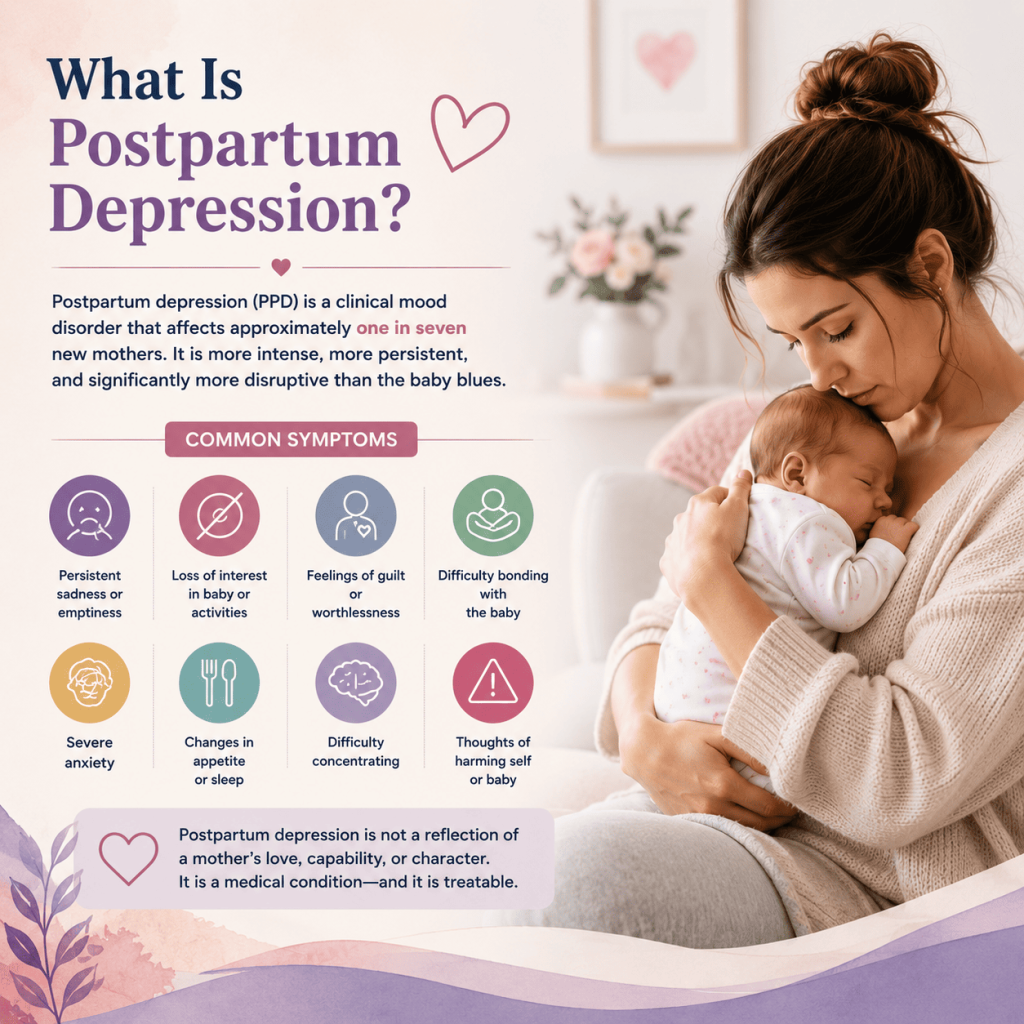
Postpartum depression (PPD) is a clinical mood disorder that affects approximately one in seven new mothers. Unlike the baby blues, postpartum depression does not resolve on its own within a couple of weeks. It is more intense, more persistent, and significantly more disruptive to daily functioning.

PPD can develop any time within the first year after childbirth, though it most commonly appears within the first few weeks to months. It can begin suddenly or gradually, and many women initially mistake it for an extended case of the baby blues – which is one reason it so frequently goes unrecognized and untreated.

The symptoms of postpartum depression go beyond ordinary new-parent exhaustion. They include persistent sadness or emptiness, loss of interest in the baby or in activities that previously brought pleasure, feelings of worthlessness or guilt, difficulty bonding with the newborn, severe anxiety, changes in appetite or sleep that go beyond typical new-parent disruption, difficulty concentrating, and in more severe cases, thoughts of harming oneself or the baby.
It is important to state clearly: postpartum depression is not a reflection of a mother’s love for her child, her capability as a parent, or her character. It is a medical condition driven by a combination of hormonal, psychological, and social factors, and it requires professional support.

Risk Factors for Postpartum Depression

While postpartum depression can affect any new mother regardless of background, certain factors increase the likelihood of developing it:

  • A personal or family history of depression, anxiety, or other mood disorders
  • Previous experience of postpartum depression after an earlier pregnancy
  • Significant life stressors during or after pregnancy, including financial pressure, relationship difficulties, or housing instability
  • Lack of a strong social support network
  • Complications during pregnancy or childbirth
  • Ambivalence about the pregnancy
  • Sleep deprivation beyond what is typical for new parents

Knowing these risk factors does not mean postpartum depression is inevitable – but it does mean that awareness and early monitoring are especially important.

What About Postpartum Anxiety?

Postpartum anxiety is less widely discussed than PPD, but it is equally common – affecting roughly one in five new mothers. It is characterized by excessive worry, racing thoughts, a constant sense of dread or danger, restlessness, and physical symptoms like a racing heart or muscle tension.

Some new mothers experience postpartum anxiety alongside depression. Others experience anxiety without significant depressive symptoms. Both are valid, both are treatable, and both deserve professional attention.

Treatment Options That Work

Postpartum depression is highly treatable. The most effective approaches typically involve one or more of the following:

  • Therapy: Cognitive behavioral therapy (CBT) and interpersonal therapy (IPT) are both evidence-based approaches with strong outcomes for postpartum depression. Sessions with a licensed mental health counselor provide a safe space to process emotions, challenge negative thought patterns, and develop practical coping strategies.
  • Medication: Antidepressants – particularly selective serotonin reuptake inhibitors (SSRIs) – are considered safe for breastfeeding mothers in most cases and can be highly effective for moderate to severe PPD. A healthcare provider can help evaluate the right approach.
  • Support groups: Connecting with other mothers who have experienced PPD can reduce isolation and shame in profound ways. Peer support is a powerful complement to professional treatment.
  • Lifestyle adjustments: While not a standalone treatment, prioritizing sleep, nutrition, physical movement, and social connection supports recovery alongside clinical interventions.

What Partners and Families Can Do

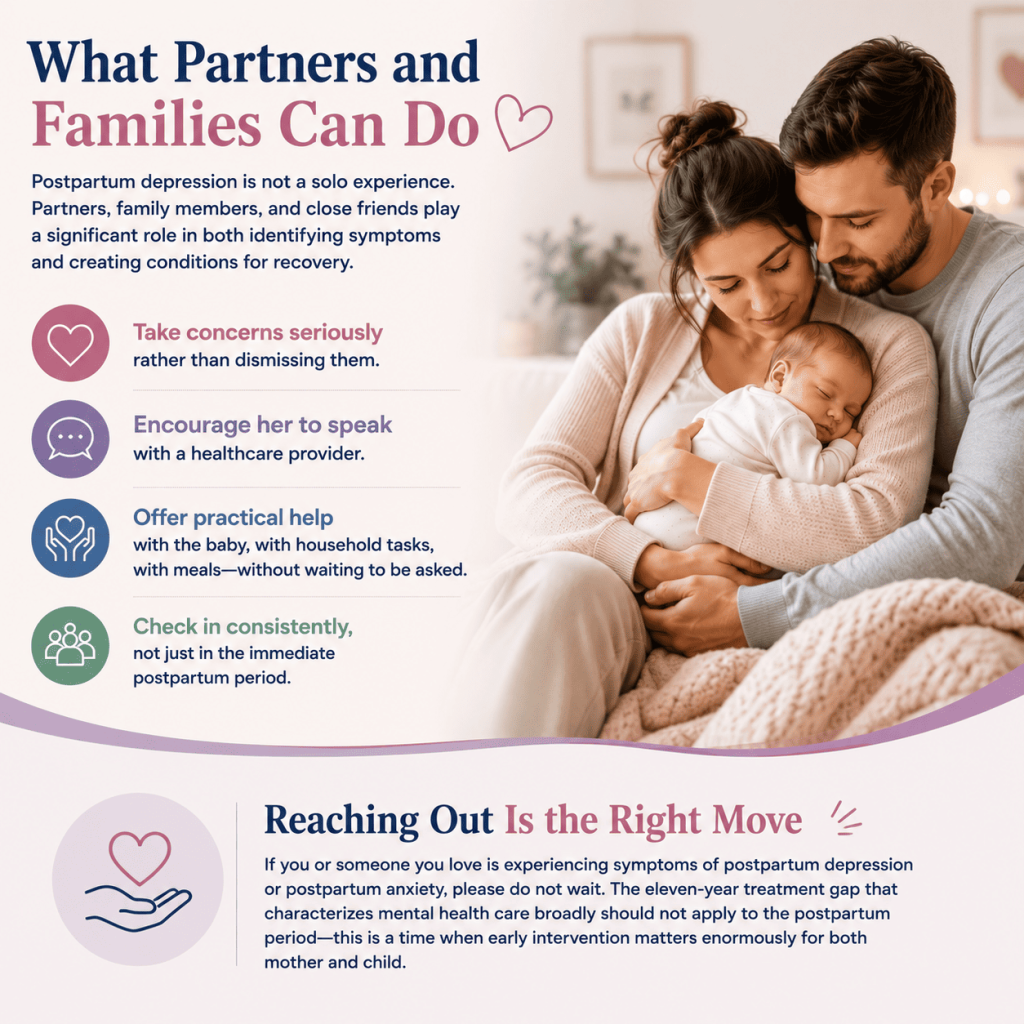
Postpartum depression is not a solo experience. Partners, family members, and close friends play a significant role in both identifying symptoms and creating conditions for recovery. If you are supporting a new mother, take concerns seriously rather than dismissing them. Encourage her to speak with a healthcare provider. Offer practical help – with the baby, with household tasks, with meals – without waiting to be asked. And check in consistently, not just in the immediate postpartum period.

Reaching Out Is the Right Move

If you or someone you love is experiencing symptoms of postpartum depression or postpartum anxiety, please do not wait. The eleven-year treatment gap that characterizes mental health care broadly should not apply to the postpartum period – this is a time when early intervention matters enormously for both mother and child.

At The New Hope Mental Health Counseling Services, our licensed therapists specialize in mental health and provide compassionate, evidence-based care for new mothers navigating postpartum depression, anxiety, and the emotional complexity of early parenthood. As a trusted mental health clinic in New York, we offer both in-person and virtual appointments designed to fit the realities of new-parent life. You deserve support. Visit www.thenewhopemhcs.com to connect with a mental health counselor in New York who understands what you are going through.

Take the first step toward better mental health!

Fill the Below Form and Schedule a Clinical Consultation with us today→

Skip to content