The New Hope MHCS

When the Changing Seasons Affect Your Mood

As the days grow shorter and the sunlight begins to fade, you might notice a change in how you feel. Getting out of bed becomes harder. You feel tired even after a full night’s sleep. Plans with friends start to feel like too much effort, and activities you usually enjoy no longer hold the same appeal.

At first, you might blame it on the weather or a busy schedule. Perhaps you tell yourself that everyone feels a little sluggish during winter. But what if the change in your mood continues for weeks and begins affecting your relationships, work, sleep, and everyday life?

For some people, these changes may be related to Seasonal Affective Disorder (SAD), a type of depression associated with seasonal patterns. It is more than the occasional winter blues. SAD can affect emotional wellbeing, energy levels, concentration, and the ability to manage daily responsibilities.

Understanding the symptoms can help you recognize when it may be time to seek support.

What Is Seasonal Affective Disorder?

Seasonal Affective Disorder is a form of depression in which symptoms typically appear during particular seasons and improve during other times of the year. The most common pattern begins in late fall or early winter and improves in spring or summer. Some people experience a less common summer pattern.

SAD is not simply a dislike of cold weather. It involves changes in mood and functioning that can become significant enough to interfere with everyday activities.

Researchers believe that changes in daylight may influence the body’s internal clock, sleep patterns, and systems involved in regulating mood. Changes in melatonin and serotonin activity may also contribute, although the exact causes are not fully understood.

A person may experience seasonal depression differently from someone else. One individual might sleep much more than usual and struggle to get moving in the morning. Another may experience persistent sadness, anxiety, irritability, or difficulty concentrating.

The important distinction is the pattern, persistence, and impact of the symptoms.

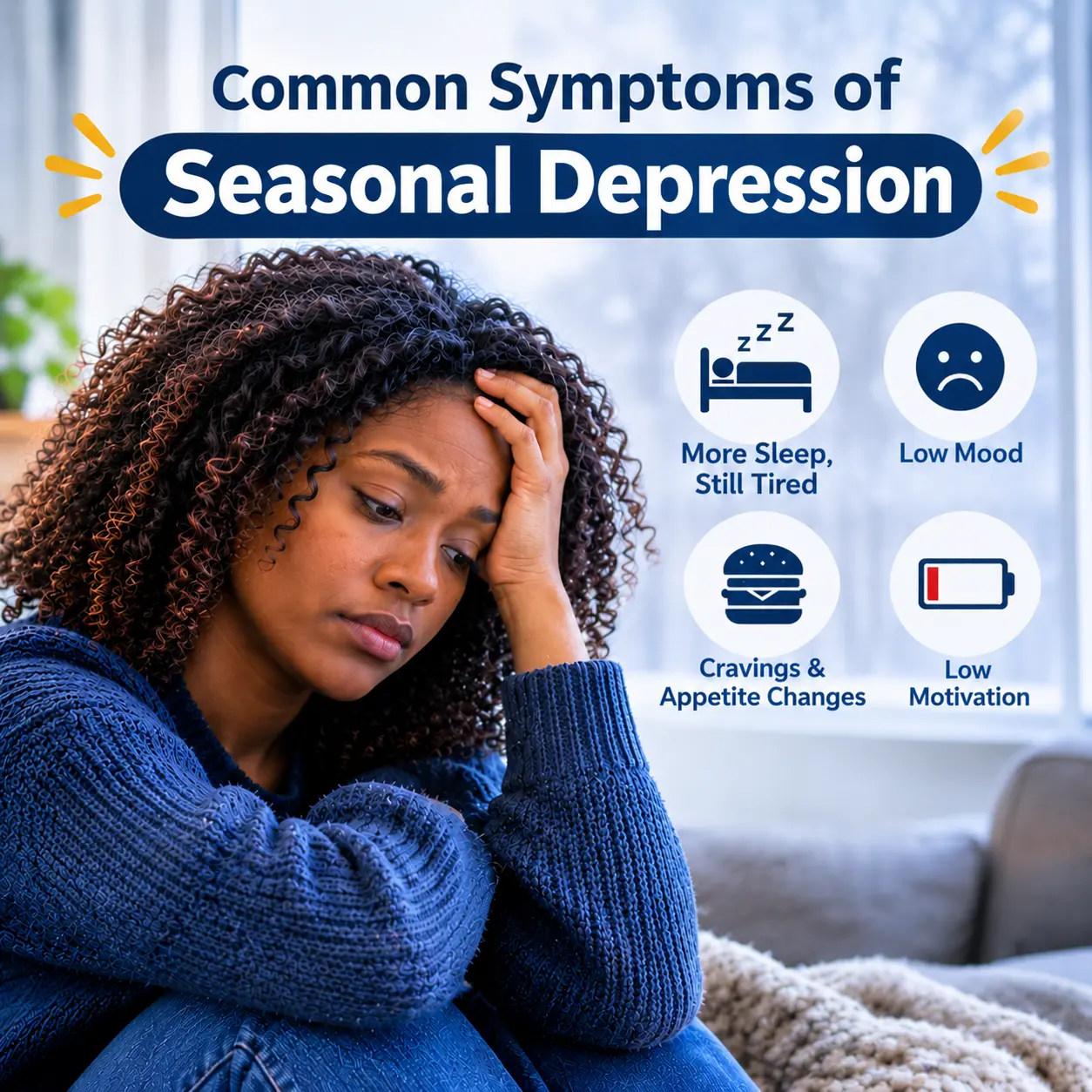
Seasonal Depression Symptoms Infographic

What Are the Common Symptoms of Seasonal Depression?

Seasonal depression can affect both emotional and physical wellbeing.

You might notice that you are sleeping longer but still waking up exhausted. Your body feels heavy, and even ordinary tasks require more effort. You may crave carbohydrates, notice changes in your appetite, or find that your motivation has dropped.

Emotionally, you may feel low, hopeless, anxious, or unusually irritable. Social invitations become easier to decline. You might stop returning calls or avoid activities because you simply do not have the energy.

Concentration can become difficult, too. Tasks that normally take half an hour may stretch across the afternoon. You may find yourself making mistakes at work or struggling to follow conversations.
Some people experience feelings of worthlessness or guilt. Others begin withdrawing from people they care about because they do not want to explain what is happening.

These symptoms deserve attention when they persist, recur around the same season, or interfere with daily functioning.

If you experience thoughts of suicide or feel that you may be unable to keep yourself safe, seek immediate support. In the United States, you can call or text 988 for the Suicide and Crisis Lifeline

Is It Seasonal Affective Disorder or Just the Winter Blues?

The winter blues and seasonal affective disorder are not the same thing.

It is common to feel less energetic when daylight decreases or when colder weather limits outdoor activities. You might prefer staying home, sleeping a little longer, or spending more time indoors.

With SAD, however, the changes are more persistent and can significantly affect how you function.

You may struggle to complete your usual responsibilities, lose interest in activities you once enjoyed, experience major changes in sleep or appetite, or feel depressed for much of the day over an extended period.

You do not need to determine the difference on your own. Depression, thyroid conditions, sleep disorders, medication effects, and other health concerns can produce overlapping symptoms.

A healthcare professional can help assess what may be contributing to the changes you are experiencing.

Why Does Seasonal Depression Happen?

There is no single explanation for SAD. Several biological and environmental factors may contribute.

Reduced exposure to daylight may affect circadian rhythms, which help regulate the sleep-wake cycle. When that rhythm becomes disrupted, sleep, energy, and mood may be affected.

Seasonal changes may also influence the body’s regulation of serotonin, a neurotransmitter involved in mood, and melatonin, a hormone that helps regulate sleep.

Some people may be more vulnerable because of a personal or family history of depression or other mood disorders.

Life circumstances can add another layer. Winter may bring reduced social contact, fewer opportunities for outdoor activity, holiday-related stress, or difficult memories associated with particular times of year.

These factors do not mean that seasonal depression is a personal weakness. They help explain why some people experience a genuine and recurring change in their mental health.

What Treatments Can Help With Seasonal Affective Disorder?

The right treatment depends on your symptoms, medical history, and how seasonal changes affect your life.

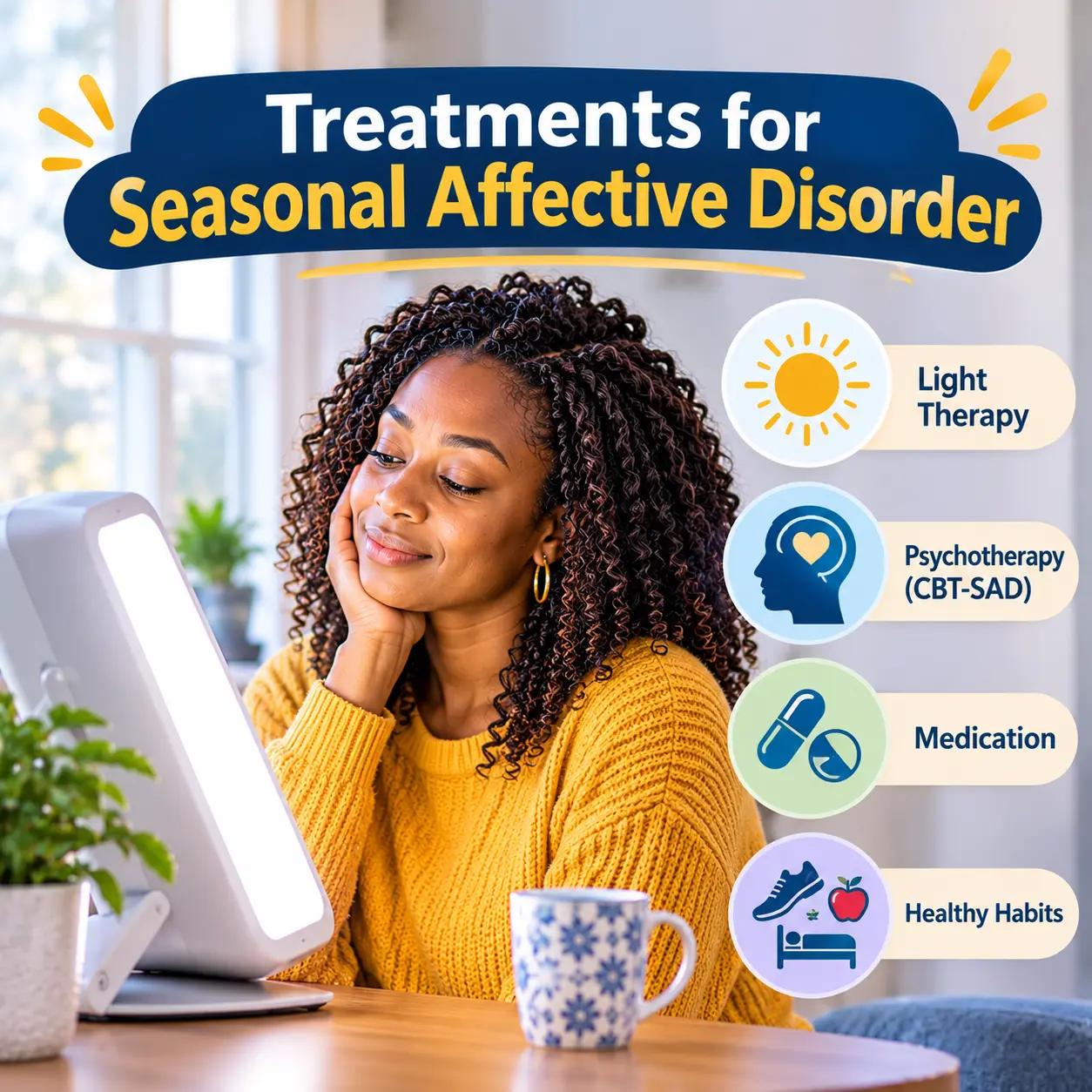
Light therapy is commonly used for winter-pattern SAD. It involves sitting near a specially designed light therapy box for a prescribed amount of time, often in the morning. These devices are different from ordinary household lamps. People with certain eye conditions or those taking medications that increase light sensitivity should consult a healthcare professional before using one.

Psychotherapy can help you understand the thoughts, behaviors, and emotional patterns associated with seasonal depression. Cognitive behavioral therapy adapted for SAD, sometimes called CBT-SAD, focuses on recognizing unhelpful thinking patterns and developing practical ways to respond to seasonal changes.

Seasonal Affective Disorder Treatments

For example, if you begin withdrawing from friends because you feel tired and unmotivated, therapy may help you explore that pattern and identify manageable ways to maintain connection without overwhelming yourself.

Medication may be appropriate for some people, particularly when symptoms are moderate to severe or recur consistently. A qualified medical or psychiatric professional can discuss the potential benefits, risks, and options.

Sleep routines, regular physical activity, exposure to natural daylight when possible, and consistent social contact may also support overall wellbeing. These steps are not a substitute for treatment when depression is significantly affecting your life.

When Should You See a Therapist?

Consider speaking with a mental health professional if low mood, loss of interest, fatigue, changes in sleep, or difficulty concentrating continue for more than a brief period or begin interfering with your relationships, work, or daily responsibilities.

You may also benefit from seeking help if you notice that the same difficulties return every fall or winter.

You do not have to wait until you can no longer get through the day.

A therapist can help you explore what you are experiencing, develop coping strategies, and determine whether additional evaluation or treatment may be appropriate.

If you are searching for a mental health counselor in New York, look for a licensed professional with experience treating depression, mood changes, and seasonal mental health concerns. Ask about their approach to treatment and whether they coordinate care with other healthcare providers when needed.

Finding Mental Health Support in New York

Seasonal depression can make ordinary life feel surprisingly difficult. You may understand that the season will eventually change and still struggle with how you feel right now.

At The New Hope Mental Health Counseling Services, individuals seeking mental health services in New York can explore their concerns in a supportive counseling environment. If seasonal changes have been affecting your mood, energy, or relationships, reaching out can be a first step toward understanding what is happening and identifying appropriate support.

You do not need to have all the answers before beginning therapy. You can start by explaining what you have noticed and how long it has been affecting you.

Sometimes the first thing you need is not another reminder to stay positive. It is a chance to talk honestly about how difficult things have become.

Seasonal Affective Disorder Symptoms - Your Questions Answered (FAQs)

1. What are the first signs of Seasonal Affective Disorder?
Early signs may include persistent low mood, reduced interest in activities, fatigue, sleeping more than usual, difficulty concentrating, changes in appetite, and social withdrawal. Symptoms that persist or interfere with everyday functioning deserve professional attention.
2. How long does Seasonal Affective Disorder last?
Winter-pattern SAD commonly begins in late fall or early winter and improves during spring or summer. The duration and severity vary from person to person.
3. Can therapy help with Seasonal Affective Disorder?
Yes. Psychotherapy, including cognitive behavioral therapy adapted for SAD, can help people understand depressive patterns and develop ways to manage symptoms. Light therapy and medication may also be appropriate for some individuals.
4. Is Seasonal Affective Disorder the same as the winter blues?
No. The winter blues generally involve milder, temporary changes in mood or energy. SAD involves depressive symptoms that are more persistent and may significantly interfere with daily life.
5. When should I see a mental health counselor in New York for seasonal depression?
Consider seeking help when symptoms persist, recur seasonally, or affect sleep, relationships, work, or everyday activities. Seek urgent support if you experience thoughts of suicide or cannot keep yourself safe.

Take the first step toward better mental health!

Fill the Below Form and Schedule a Clinical Consultation with us today→

Skip to content