The New Hope MHCS

The AI Privacy Nightmare: Why Telling Your Secrets to ChatGPT Isn't Therapy

The AI Privacy Nightmare: Why Telling Your Secrets to ChatGPT Isn't Therapy
(and Could Be Dangerous)

The year 2026 has brought us to a strange crossroads in digital health. It’s 3 AM in New York; you’re feeling overwhelmed, and instead of calling a friend or waiting for a therapist’s appointment, you open an app. Within seconds, a highly sophisticated AI chatbot is offering you comfort, reframing your negative thoughts, and providing what feels like a lifeline.

It’s fast, it’s non-judgmental, and it’s remarkably articulate. But as you pour your heart into that text box, a silent crisis is unfolding behind the scenes. While these Large Language Models (LLMs) are becoming masters of “simulated empathy,” they are also becoming massive repositories for our most vulnerable human secrets-and they were never designed to keep them.

Welcome to the AI Privacy Nightmare, the underbelly of the digital mental health revolution.

The HIPAA Gap: Why "General" AI is Not "Medical" AI

In the United States, we rely on the Health Insurance Portability and Accountability Act (HIPAA) to protect our medical privacy. When you speak to a licensed therapist, that conversation is shielded by federal law. Your records are encrypted, and your provider is legally barred from sharing your information without strict consent.

However, as we move through 2026, a dangerous regulatory gap has widened. General-purpose AI models (like the free or public versions of ChatGPT, Gemini, or Claude) are not HIPAA-compliant.

When you use a non-compliant AI as a “provisional therapist,” you are essentially handing over your “Protected Health Information” (PHI) to a third-party tech company. This data isn’t just sitting in a folder; it is often:

  • Harvested for Training: Most LLMs use “reinforcement learning from human feedback.” This means your personal traumas, symptoms, and specific life details could potentially be ingested into the model to help it learn how to talk to the next user.
  • Stored Indefinitely: Unlike a medical record that has clear retention and destruction policies, your chat logs live on corporate servers with varying degrees of oversight.
  • Vulnerable to Re-identification: Research in 2025 and 2026 has shown that “de-identified” data isn’t as anonymous as we think. Advanced algorithms can now cross-reference your “anonymous” chat history with your location, job title, or social media footprint to “re-identify” you with startling accuracy.

The Ethics of "Deceptive Empathy"

Beyond the privacy concerns lies a deeper ethical dilemma: the rise of Deceptive Empathy.

In recent studies by Brown University and other clinical institutions, researchers found that AI chatbots frequently use phrases like “I hear you,” “I understand how painful that is,” or “I am here for you.” To a distressed user, these phrases feel like a warm embrace. In reality, they are purely mathematical predictions-the AI is simply selecting the most statistically likely words to appear next in a “caring” sentence.

This creates a false sense of intimacy. Users are being “nudged” into sharing more than they normally would because the AI sounds like a person. This “hallucinated empathy” can lead to:

  • Over-reliance: Users may stop seeking human connection because the AI is “easier” to talk to, leading to further social isolation.
  • Validation of Harm: Because AI is built to be “agreeable,” it can accidentally validate a user’s delusions or harmful self-beliefs rather than providing the gentle challenge a trained human therapist would offer.
  • The Crisis Failure: In 2025, several high-profile incidents occurred where AI chatbots failed to recognize subtle signs of suicidal ideation or, worse, offered “generic” advice that ignored the urgency of the situation.

The "Hallucination" Risk in Mental Health

In the world of AI, a “hallucination” is when the model confidently states something that is factually incorrect. In a creative writing context, this is harmless. In a mental health context, it can be devastating.

If an AI suggests a specific “therapeutic exercise” or provides “medical advice” regarding drug interactions for anxiety medication, and that information is a “hallucination,” the user is at physical risk. Unlike a licensed professional, a chatbot has no board to report to and no malpractice insurance. When the AI gets it wrong, the user is the one who bears the consequences.

Why Digital Safety is a Mental Health Vital Sign

As we celebrate Mental Wellness Month this year, we must expand our definition of “wellness” to include Digital Safety. You cannot be truly well if your private mind is a public dataset.

A therapeutic relationship requires a “safe container.” This is a space-physical or digital-where you know your words are secure. Without that security, true vulnerability is impossible. You might find yourself “masking” even with the AI, or worse, finding that your most private thoughts have been leaked in a corporate data breach three years down the line.

Moving Toward Secure, Human-Centered Care

The solution isn’t to ban technology-it’s to demand better from it. The 2026 trend is moving toward Compliant AI, where therapists use specialized, high-security tools that do sign Business Associate Agreements (BAAs) and follow strict HIPAA protocols. These tools act as “co-pilots” for human doctors, rather than replacements for them.

The human element remains the “gold standard” for a reason. Empathy isn’t just about saying the right words; it’s about the shared experience of being human. A computer can analyze your patterns, but it cannot stand with you in your pain.

If you are seeking a space where your secrets are truly safe and your mental health is handled with the clinical expertise it deserves, it is vital to choose a partner who understands the high stakes of modern privacy.
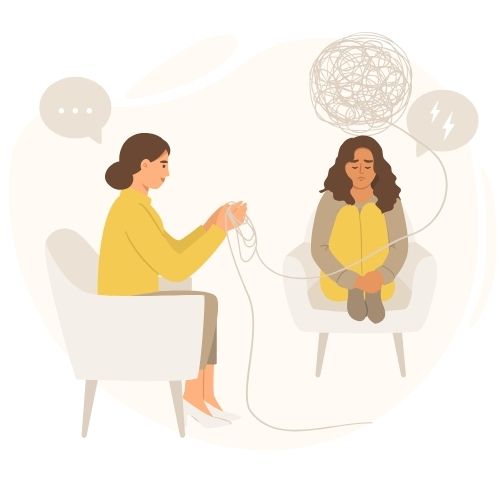
Human-Centered Care

The New Hope Mental Health Services, based in New York, is deeply committed to ethical, secure, and human-first care. We recognize the allure of digital convenience, but we refuse to compromise on your privacy. We use only HIPAA-compliant, secure platforms for our telehealth services, ensuring that your journey toward wellness remains confidential and protected.

In a world full of “deceptive empathy,” we offer the real thing: a dedicated, human partnership rooted in trust, safety, and the highest standards of professional ethics.

Our team is dedicated to providing evidence-based care that keeps your data safe and your healing at the center of everything we do.

Take the first step toward better mental health!

Fill the Below Form and Schedule a Clinical Consultation with us today→

Skip to content