The New Hope MHCS

Small Actions, Big Impact: How Everyday Habits Improve Your Mental Health

There is a persistent myth in mental health culture that meaningful change requires dramatic action. That you need to overhaul your routine, commit to daily meditation, go to therapy three times a week, or otherwise transform your life wholesale before you can expect to feel better. That myth keeps a lot of people stuck.

The truth, supported by decades of research in psychology and neuroscience, is considerably more accessible. Small, consistent actions – repeated over time – produce real, measurable improvements in mental health. You do not need a perfect plan. You need a starting point.

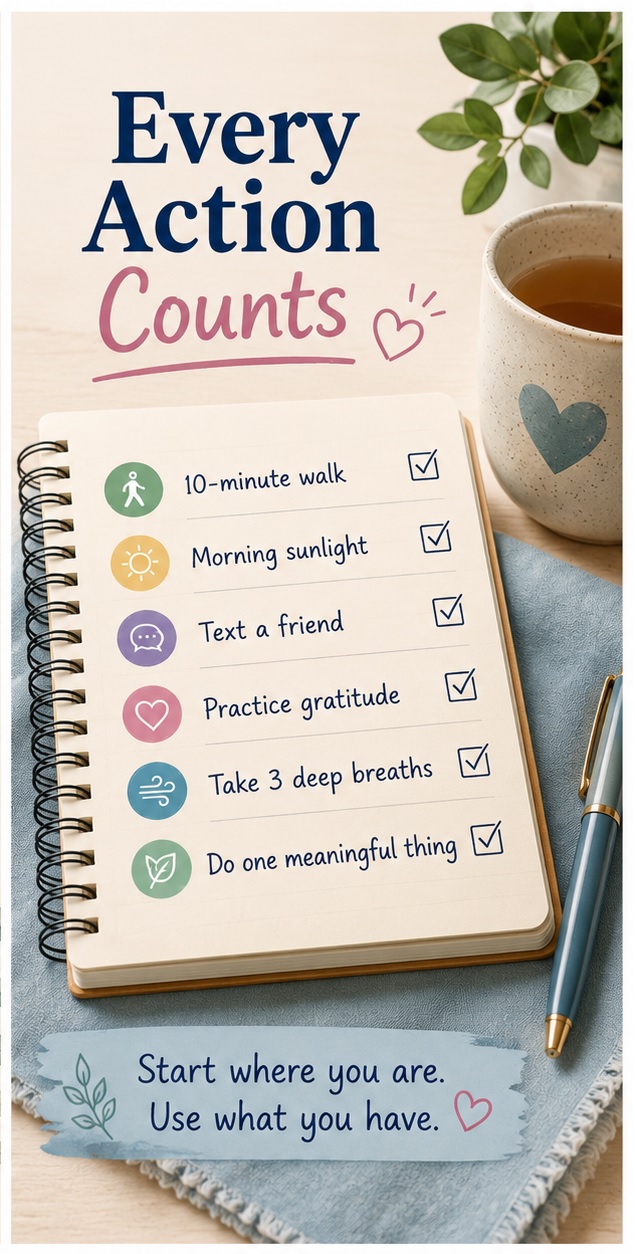
Mental Health Awareness Week 2026 carries the theme “Every Action Counts”. That message is not inspirational filler. It is a clinically grounded observation about how mental wellness actually develops.

Why Small Actions Work: The Science

The human brain is shaped by repetition. Every time you engage in a behavior, the neural pathways associated with it become slightly stronger. Over time, what began as a deliberate, conscious choice becomes a habit – something that happens with less friction and less effort.

This applies to mental health behaviors just as it applies to any other skill. Going for a ten-minute walk when you feel anxious, writing down three things you noticed today, taking three slow breaths before a stressful meeting – these acts seem almost too small to matter. But performed consistently, they begin to rewire your relationship with stress, anxiety, and emotional regulation.

The behavioral activation model in cognitive behavioral therapy (CBT) is built on exactly this principle: that taking small, meaningful actions – even when motivation is low – produces positive emotional feedback that gradually builds momentum.

The Five Pillars of Daily Mental Health Habits

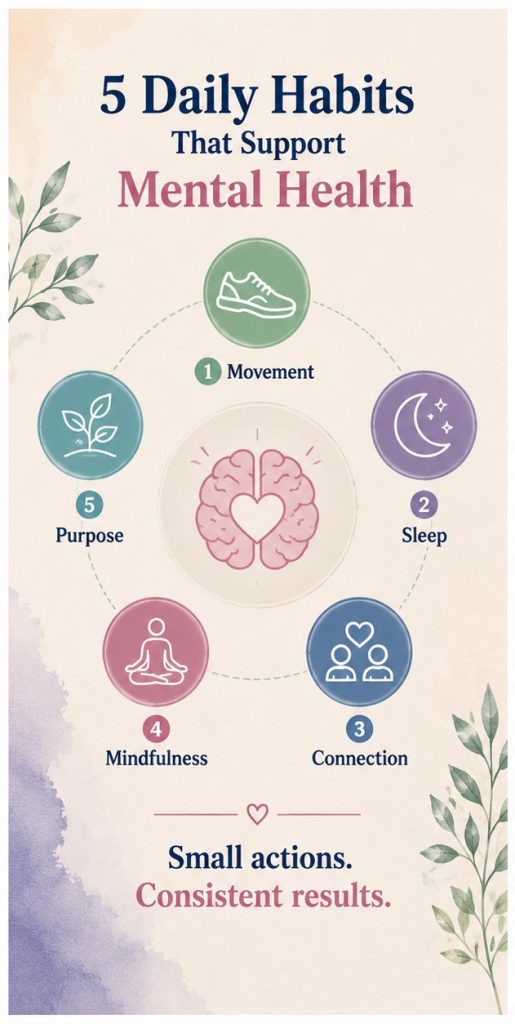
While the science of individual habits is compelling, the most robust approach to everyday mental wellness involves attending to several interconnected domains. Think of these as five pillars, each supporting the others.

5 Daily Habit for mental wellness routine

1. Movement

Physical activity is one of the most well-researched mental health interventions available – and it requires no prescription. Even moderate exercise, like a 20-minute walk, has been shown to reduce cortisol levels, increase endorphins, and improve mood. You do not need a gym membership or a structured workout plan. Consistency matters more than intensity. A ten-minute walk taken every day is more beneficial than an occasional intense session.

2. Sleep

Sleep is the foundation upon which every other mental health effort rests. Chronic sleep deprivation impairs emotional regulation, increases anxiety and irritability, and weakens the prefrontal cortex’s ability to inhibit the amygdala – the brain’s threat-detection center. Protecting your sleep through consistent bedtimes, a dark and cool environment, and limiting screen exposure before bed is one of the highest-leverage mental health actions you can take.

3. Connection

Humans are wired for social connection. Loneliness activates the same brain regions as physical pain, and chronic isolation is associated with significantly elevated rates of depression and anxiety. Building connection does not require large social gatherings or new friendships. A genuine conversation with someone you already know – one where you are actually present and engaged – contributes meaningfully to your sense of belonging and wellbeing.

4. Mindfulness and Presence

Mindfulness is not a personality type or a spiritual practice exclusive to certain people. It is simply the act of paying deliberate attention to the present moment without judgment. Research consistently shows that even brief daily mindfulness practice – as little as five to ten minutes – reduces rumination, decreases anxiety, and improves overall emotional regulation. Apps, guided sessions, or simply sitting quietly with a cup of tea qualify.
5. Meaning and Purpose

Engaging in activities that feel meaningful – whether that is creative work, volunteering, learning something new, or spending time in nature – activates a different dimension of wellbeing than pleasure alone. Purpose is associated with resilience, reduced depression, and a greater sense of life satisfaction. Small doses of meaningful activity, built into the routine of an ordinary week, have measurable effects on mental health outcomes.

Practical Ways to Start Today

Here are concrete, low-barrier actions you can take immediately – no apps, no gym, no overhaul required:

  • Set a consistent wake time and protect it, even on weekends.
  • Step outside for ten minutes in the morning without your phone.
  • Send one message this week to someone you have been meaning to check in with.
  • Before bed, write down one specific thing that happened today that you are grateful for.
  • When you notice anxious thoughts spiraling, name what you are feeling out loud or on paper. Labeling emotions reduces their intensity – a process neuroscientists call “affect labeling.”
  • Choose one activity this week that has nothing to do with productivity.
Every Action Counts

When Habits Are Not Enough

It is worth naming something clearly: lifestyle habits are powerful, but they are not a substitute for professional care when professional care is what is needed. If you are experiencing persistent depression, significant anxiety, trauma responses, or any mental health symptoms that are meaningfully interfering with your daily life, the most important action you can take is reaching out to a licensed professional.

There is no hierarchy in which habits need to come before therapy, or therapy only makes sense after everything else has failed. Both can and should coexist.

The New Hope Mental Health Counseling Services provides individualized, evidence-based mental health care for adults navigating anxiety, depression, stress, and a wide range of emotional challenges. If you are searching for a mental health counselor in New York or looking for a mental health clinic in New York that meets you where you are, our team is ready to help. Visit www.thenewhopemhcs.com to learn about our services and take your next step.

The Takeaway

Mental Health Awareness Week’s theme of “Every Action Counts” is a reminder worth carrying into every day of the year, not just May. The gap between where you are and where you want to be mentally is not closed by a single dramatic intervention. It is closed, gradually and surely, by the accumulation of small, intentional choices made over time.

Start where you are. Use what you have. Do what you can.

Take the first step toward better mental health!

Fill the Below Form and Schedule a Clinical Consultation with us today→

Skip to content