The New Hope MHCS

How to Manage Anxiety Daily: A Practical Guide for Stress Awareness Month

How to Manage Anxiety Daily: Stress Awareness Month 2026 Guide

Every April, Stress Awareness Month offers a meaningful opportunity to pause and honestly assess how we are managing the pressures of daily life. For millions of people, stress is not just an occasional visitor – it is a constant companion. And when stress goes unaddressed, it frequently evolves into something more persistent: anxiety.

Anxiety is the most searched mental health topic year after year, and the demand for practical, accessible tools to manage it continues to grow. This guide walks you through daily strategies grounded in evidence so you can take meaningful steps toward calmer, more balanced living.

Understanding the Difference Between Stress and Anxiety

Before diving into management strategies, it helps to understand what separates stress from anxiety. Stress is typically a response to an external trigger – a deadline, a conflict, or financial pressure. Once the trigger resolves, the stress usually fades.

Anxiety, on the other hand, tends to persist even when the external stressor is gone. It is marked by excessive worry, physical tension, difficulty sleeping, and a sense of dread that can feel difficult to explain. Recognizing which one you are dealing with helps you choose the right tools.

Daily Habits That Genuinely Help

Managing anxiety is not about eliminating every source of stress from your life – that is neither realistic nor desirable. It is about building a daily routine that gives your nervous system the support it needs to stay regulated. Here are strategies that work:

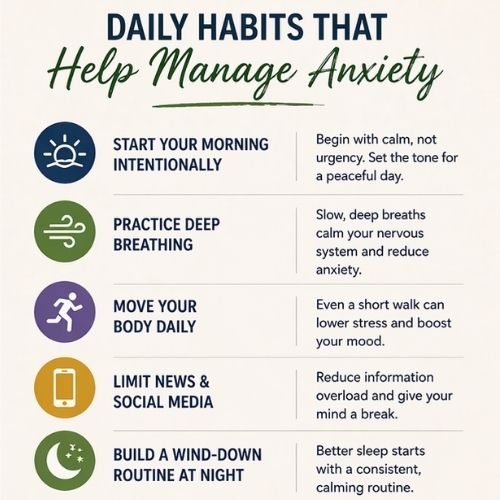
Start your morning intentionally. The first 20 minutes of your day set the tone for everything that follows. Rather than reaching for your phone immediately, try five minutes of deep breathing, light stretching, or simply sitting quietly. This signals to your brain that the day begins from a place of calm, not urgency.

Practice diaphragmatic breathing. When anxiety spikes, your breathing typically becomes shallow and rapid, which reinforces the stress response. Slow, deep breaths from the belly activate the parasympathetic nervous system – your body’s built-in calming mechanism. Try inhaling for four counts, holding for four, and exhaling for six.

Move your body daily. Exercise is one of the most well-studied anxiety management tools available. Even a 20-minute walk has been shown to reduce cortisol levels and improve mood. You do not need an intense workout; consistent, moderate movement is what matters most.

Daily Habits that help manage stress

Limit news and social media consumption. Constant exposure to distressing content keeps your nervous system in a low-level state of alert. Setting specific times to check news – rather than scrolling throughout the day – can significantly reduce ambient anxiety.

Build a wind-down routine at night. Poor sleep worsens anxiety, and anxiety worsens sleep. Breaking this cycle starts with a consistent bedtime routine: dim lighting, no screens 30 to 60 minutes before sleep, and calming activities like reading or gentle stretching.

The Role of Cognitive Patterns in Anxiety

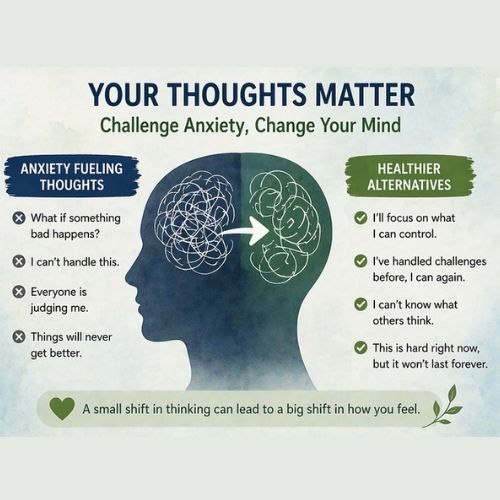
Anxiety is not just a physical experience – it is deeply rooted in thought patterns. Catastrophizing (assuming the worst outcome), black-and-white thinking, and mind-reading (assuming you know what others are thinking) are all cognitive habits that fuel anxiety.

Learning to identify and gently challenge these patterns is at the core of cognitive behavioral therapy (CBT), which is widely considered one of the most effective treatments for anxiety disorders. A licensed mental health counselor can guide you through this process in a structured, supportive way.

When Self-Help Is Not Enough

Self-management strategies are powerful, but they have limits. If your anxiety is interfering with your ability to work, maintain relationships, or enjoy daily life, professional support is the appropriate next step. There is no threshold you need to reach before asking for help – if anxiety is affecting your quality of life, that is reason enough.

Therapy, medication, or a combination of both can make a significant difference. A mental health professional can help you identify the root causes of your anxiety and develop a personalized treatment plan.

Your Thought Matter

Making This Stress Awareness Month Count

Awareness without action rarely leads to change. This April, consider committing to one or two of the strategies above. Start small – sustainability matters more than intensity. Track how you feel after a week of consistent practice. And if you have been putting off reaching out for professional help, let this month be the nudge you needed.

At The New Hope Mental Health Counseling Services, we support individuals dealing with anxiety, stress, and a wide range of mental health challenges. Our team of experienced therapists includes mental health counselors in New York who offer both in-person and virtual appointments. If you are ready to take a step toward lasting relief, visit www.thenewhopemhcs.com to get started.

Final Thoughts

Managing anxiety daily is a skill – and like any skill, it improves with practice. Be consistent, be compassionate with yourself when you slip, and remember that asking for help is not giving up. It is choosing to invest in your wellbeing. This Stress Awareness Month, that choice could change everything.

Take the first step toward better mental health!

Fill the Below Form and Schedule a Clinical Consultation with us today→

Skip to content