The New Hope MHCS

Is Your Child Struggling in Silence? What Every Parent Should Know

Children are remarkably good at pretending everything is fine. They go to school, they laugh with friends, they sit at the dinner table – and all the while, something inside them is quietly, persistently hurting. They do not have the vocabulary to name it. They do not always know that what they are feeling is not normal. And in many cases, the adults around them do not know either.

If you are a parent or caregiver reading this, what follows may be one of the most important things you read this month.

The Scale of Children's Mental Health Challenges

The statistics around children’s mental health are both sobering and important to understand. According to data from the Centers for Disease Control and Prevention, one in six children between the ages of two and eight has a diagnosed mental or behavioral disorder. Anxiety and depression in children rose from 5.4 percent to 8.4 percent over a single decade. There are an estimated 2.7 million children in the United States currently living with depression.

Perhaps most striking is this: 50 percent of all mental health conditions show their first signs by the age of 14. The seeds of adult mental health struggles are frequently planted in childhood – and yet, because children’s distress often looks different from adult distress, it frequently goes unrecognized until it has already taken root.

Only eight in ten children who are diagnosed with depression actually receive treatment. For conditions that go undiagnosed – which represents a significant portion of struggling children – that number drops further still.

Why Children's Mental Health Looks Different

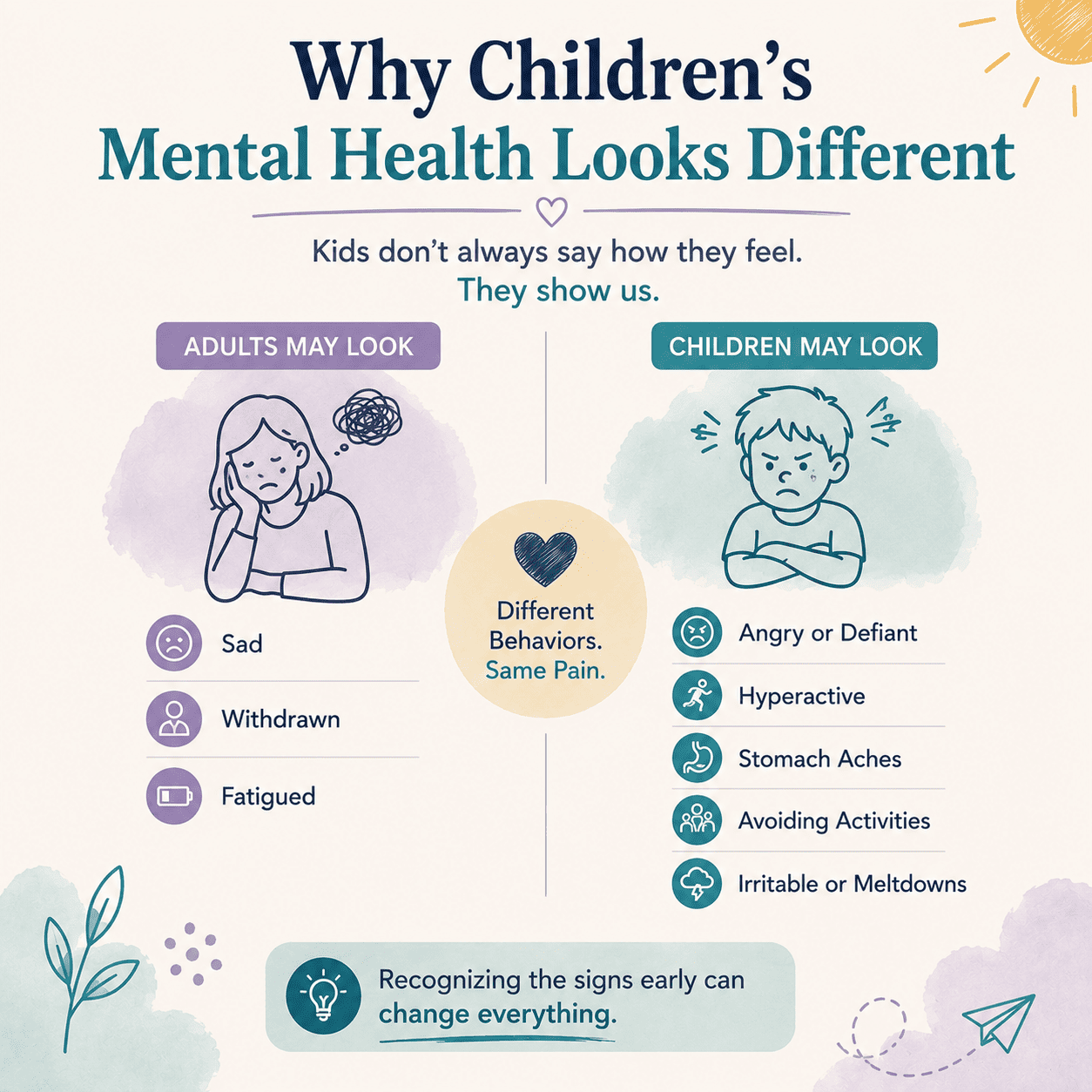
One of the primary reasons children’s mental health struggles are missed is that they do not present the way adult struggles do. A depressed adult typically looks sad, withdrawn, and fatigued. A depressed child might look angry, defiant, hyperactive, or physically unwell.

A child experiencing anxiety may not say “I feel anxious.” They may say their stomach hurts every morning before school. They may refuse to go to birthday parties. They may become clingy, irritable, or have frequent meltdowns that seem disproportionate to the situation. These behaviors are easily explained away as phases, personality traits, or poor behavior – which is exactly why so many children’s mental health conditions go unaddressed for years.

Understanding what mental health conditions actually look like in children is the first step toward recognizing them.
Common Mental Health Conditions in Children

Anxiety Disorders

Anxiety is the most common mental health condition among children. It can present as separation anxiety, social anxiety, generalized worry, specific phobias, or panic. Children with anxiety may avoid school, struggle to make friends, complain of physical symptoms like stomachaches and headaches, and become extremely distressed when routines change. Early intervention for childhood anxiety has an excellent track record – and untreated anxiety in childhood is one of the strongest predictors of anxiety and depression in adulthood.

ADHD (Attention-Deficit/Hyperactivity Disorder)

ADHD affects approximately 9.8 percent of children in the United States, making it one of the most commonly diagnosed childhood conditions. It is characterized by persistent patterns of inattention, hyperactivity, and impulsivity that interfere with functioning and development. Children with undiagnosed or untreated ADHD often struggle academically and socially, develop low self-esteem from repeated experiences of failure or frustration, and are more likely to develop secondary conditions like anxiety and depression.

It is worth noting that ADHD looks different in girls than in boys. Girls are more likely to show the inattentive presentation – daydreaming, forgetfulness, disorganization – rather than the hyperactive presentation more commonly associated with the diagnosis. This means girls are significantly more likely to go undiagnosed.

Depression in Children

Childhood depression is real, and it is distinct from ordinary sadness. A child experiencing depression may show persistent irritability or anger rather than visible sadness. They may lose interest in activities they previously enjoyed, withdraw from friends, experience changes in sleep or appetite, report feeling worthless or unloved, and in more serious cases, express thoughts of not wanting to be alive.

Depression in childhood is not a phase that children will simply grow out of. Left untreated, it can have serious consequences for academic achievement, social development, and long-term mental and physical health.

Behavioral and Conduct Disorders

Oppositional defiant disorder (ODD) and conduct disorder are among the most misunderstood childhood mental health conditions because their symptoms – defiance, aggression, rule-breaking – are often interpreted as moral failures or poor parenting rather than clinical presentations that deserve treatment. Children with these conditions are frequently responding to underlying emotional dysregulation, trauma, or neurodevelopmental differences. Appropriate assessment and intervention can make an enormous difference.

Warning Signs Parents and Caregivers Should Know

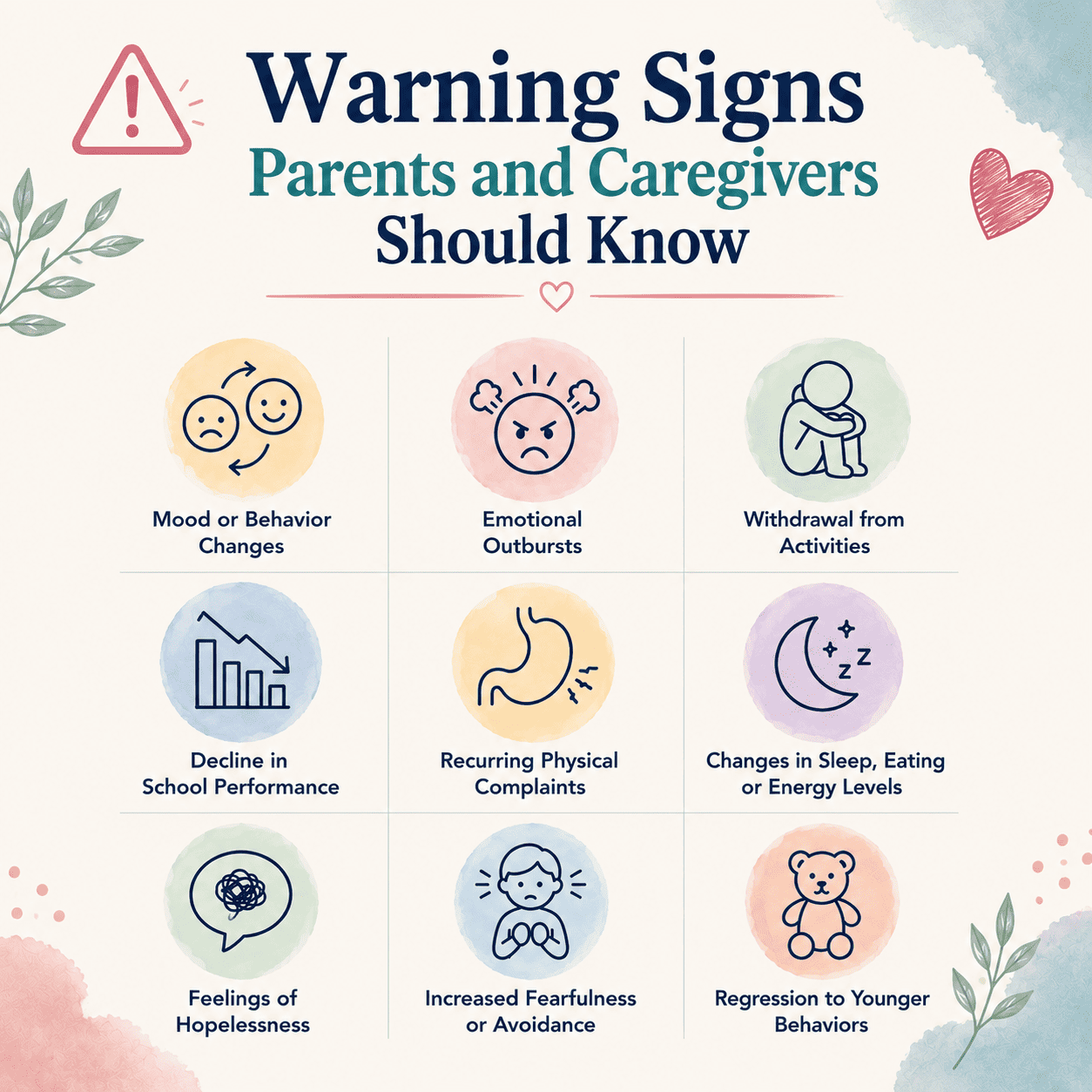
While children express distress differently based on age, temperament, and the specific condition involved, there are some general warning signs that warrant closer attention and, in many cases, professional evaluation:

  • Persistent changes in mood, behavior, or personality that last more than two weeks
  • Frequent, intense emotional outbursts that seem disproportionate to the trigger
  • Withdrawal from friends, family, or activities that previously brought enjoyment
  • Declining academic performance or a sudden loss of interest in school
  • Recurring physical complaints – stomachaches, headaches – with no identified medical cause
  • Significant changes in sleep patterns, eating habits, or energy levels
  • Expressed feelings of worthlessness, hopelessness, or not wanting to be alive
  • Increased fearfulness, clinginess, or avoidance of specific situations or places
  • Regression to behaviors typical of a younger child – bedwetting, thumb-sucking – particularly after a period of stress
Warning Signs Parents and Caregivers Should Know

Trust your instincts as a parent or caregiver. If something feels different or wrong, that feeling deserves to be taken seriously.

What to Do If You Are Concerned

The most important thing any parent or caregiver can do when they are concerned about a child’s mental health is to start a conversation – and then seek professional guidance. Here is how to begin:

  • Open the conversation gently: Rather than asking “what is wrong with you,” try “I have noticed you seem to be having a hard time lately. I am here, and I want to understand.” Children need to feel safe before they can be honest.
  • Talk to your child’s pediatrician: Primary care providers are an important first point of contact for children’s mental health concerns. They can conduct initial screenings and provide referrals to mental health specialists.
  • Contact a mental health professional who specializes in children: A child-focused therapist can conduct a thorough assessment, provide a diagnosis if appropriate, and develop a treatment plan tailored to your child’s age, temperament, and specific needs.
  • Involve the school: Teachers and school counselors spend significant time with children and can be valuable partners in both identifying concerns and supporting a child’s mental health journey.
  • Take care of yourself too: Parenting a child with mental health challenges is emotionally demanding. Seeking your own support – through therapy, support groups, or trusted relationships – is not a luxury; it is a necessity.

Early Intervention Changes Everything

The research on early mental health intervention in children is unambiguous: the earlier a condition is identified and treated, the better the outcomes. Children’s brains are still developing, which means they are also more responsive to therapeutic intervention than adult brains. Skills learned in childhood – emotional regulation, distress tolerance, flexible thinking, social problem-solving – build a foundation that serves a person for life.

Waiting to see if a child “grows out of it” is one of the most common and costly mistakes in children’s mental health. Not because parents do not care, but because they do not always know that what they are seeing is a condition that can be treated, not just a phase to be endured.

Support Is Available

At The New Hope Mental Health Counseling Services, we understand that a child’s mental health is a family matter. Our licensed mental health counselors in New York provide compassionate, age-appropriate care for children experiencing anxiety, depression, ADHD-related challenges, behavioral difficulties, and emotional dysregulation. We work collaboratively with parents and caregivers to ensure that support extends beyond the therapy room and into the environments where children spend their lives.

Whether you are searching for a mental health counselor in New York for your child, looking for a mental health clinic in New York that welcomes young patients, or simply trying to understand what your child might be going through, we are here to help. Take the step that could change your child’s trajectory. Visit www.thenewhopemhcs.com to learn more or schedule a consultation.

A Final Word

Every child deserves to be seen – not just the parts that are easy and joyful, but the parts that are struggling and scared. You do not have to figure this out alone. And neither does your child.

Take the first step toward better mental health!

Fill the Below Form and Schedule a Clinical Consultation with us today→

Skip to content