
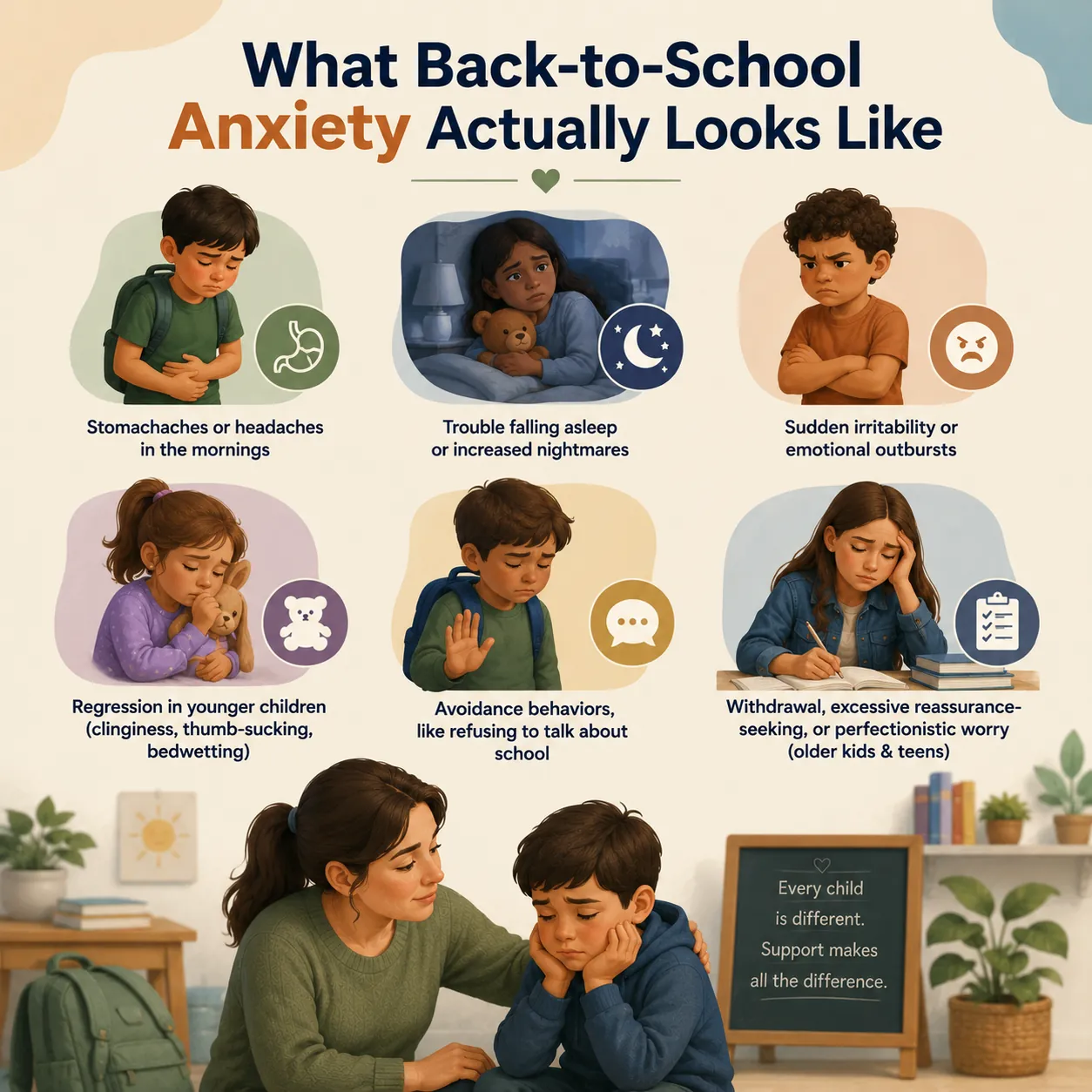
It rarely announces itself directly. Instead, it tends to appear as:
- Stomachaches or headaches in the mornings leading up to school, with no clear medical cause
- Trouble falling asleep or increased nightmares
- Sudden irritability or emotional outbursts over small things
- Regression in younger children – clinginess, thumb-sucking, bedwetting after being previously potty-trained
- Avoidance behaviors, like refusing to talk about school or getting upset when the topic comes up
- In older kids and teens, withdrawal, excessive reassurance-seeking, or perfectionistic worry about grades and social standing
Every child’s anxiety looks a little different, and it can shift with age – a five-year-old’s separation anxiety looks nothing like a fourteen-year-old’s social anxiety, even though the underlying nervous system response is similar.