The New Hope MHCS

When Military Service Ends, the Emotional Adjustment May Continue

Coming home after military service can bring relief, pride, and the chance to spend more time with family. But returning to civilian life is not always as straightforward as people expect.

A veteran may be physically home while still feeling mentally connected to experiences from service. Everyday sounds may feel unusually startling. Sleep may be difficult. Crowded places may create uneasiness, or conversations with loved ones may feel harder than they used to.

Family members may notice the changes but struggle to understand them. They might wonder why someone who once seemed confident now avoids social gatherings, becomes irritated over small things, or prefers to be alone.

These experiences can be painful for everyone involved.

Veteran mental health deserves attention both during and after military service. Difficulties with readjustment, post-traumatic stress disorder (PTSD), depression, anxiety, grief, and relationships can affect veterans and their families in different ways. Support can be helpful even when someone has been home for years.

Why Can Life After Military Service Be Difficult?

Military life often involves structure, clear responsibilities, strong team relationships, and routines shaped by service requirements. Leaving that environment can mean adjusting to a very different way of living.

A veteran may suddenly have to figure out a new career, manage unfamiliar workplace expectations, rebuild a daily routine, or discover how to spend time without the structure they previously relied on.

There may also be a loss of identity.

For someone whose service shaped their sense of purpose, leaving the military can bring questions that are difficult to explain. Who am I outside the uniform? Where do I belong now? Will anyone understand what I experienced?

These questions can arise even when the transition is voluntary and the person feels proud of their service.

The US Department of Veterans Affairs recognizes that readjustment can involve mental health, family, employment, and other practical challenges. Counseling services are available through programs designed specifically for eligible veterans, service members, and their families.

Understanding PTSD and Other Mental Health Challenges

Not every veteran experiences trauma-related symptoms, and not every struggle after service is PTSD. However, some experiences during military service can affect a person’s sense of safety long after the immediate danger has passed.

PTSD may develop after exposure to traumatic events. Symptoms can include unwanted memories, nightmares, flashbacks, avoidance of reminders, feeling constantly on guard, irritability, emotional numbness, and difficulty sleeping.

A veteran might react strongly to a sudden noise or feel uncomfortable in a crowded restaurant without fully understanding why. They may avoid certain conversations or places because those experiences bring back memories they would rather not revisit.

Other veterans experience depression or anxiety. Some feel disconnected from friends and family, lose interest in activities, struggle with concentration, or worry constantly about the future.

These symptoms are not evidence that someone is weak. They may be signs that professional assessment and support could help.

The VA provides information about evidence-based PTSD treatments, including psychotherapy and other treatment options tailored to individual needs.

When Mental Health Affects Family Bonds

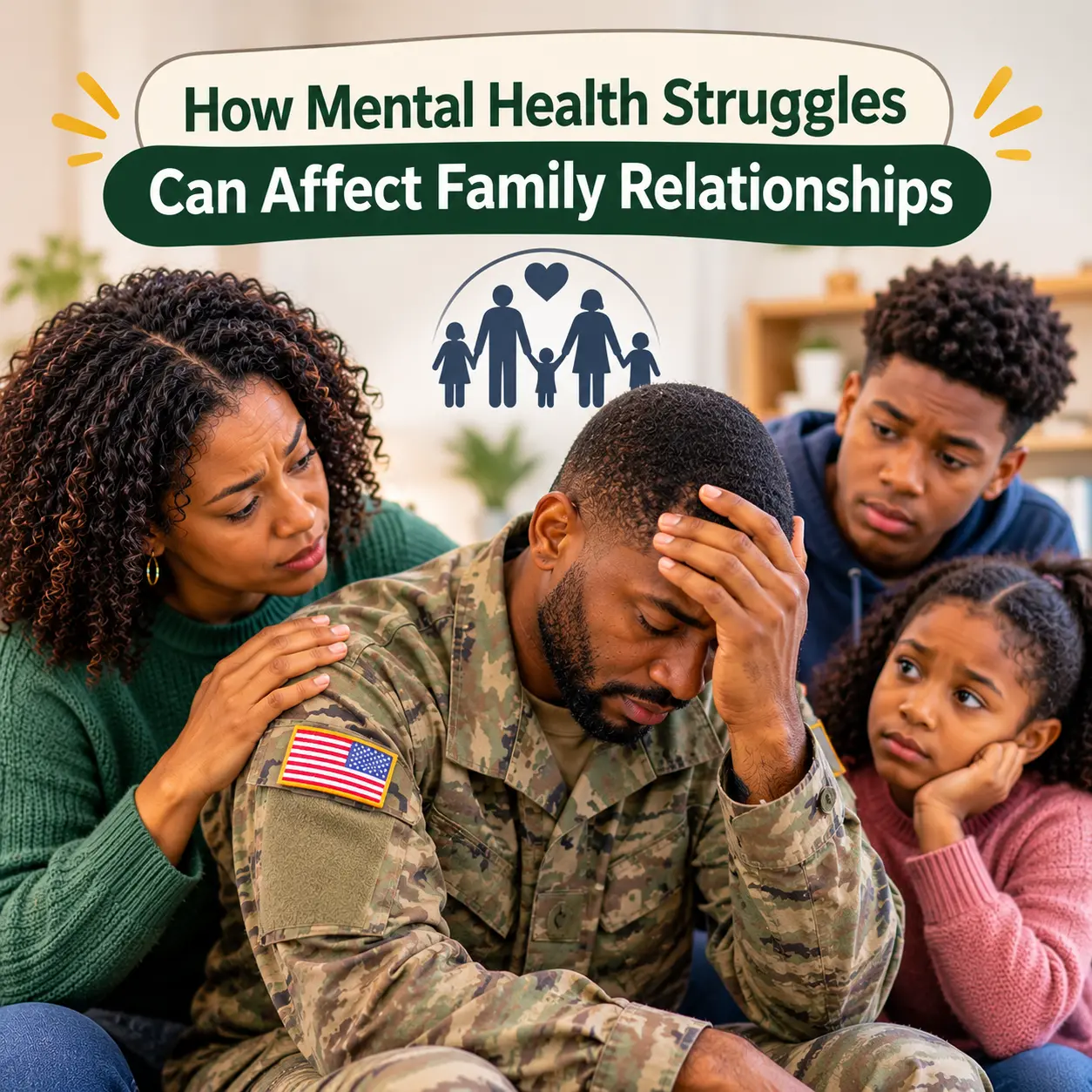
How Mental Health Struggles Can Affect Family Relationships

When one person is struggling, the effects rarely remain confined to that individual.

A spouse may feel as though they are walking on eggshells, carefully choosing words to avoid an argument. A partner may miss the closeness they once shared but feel guilty for admitting it. Children may notice that a parent is quieter, more irritable, or less available emotionally.

Sometimes families develop routines around the veteran’s distress without realizing it.

They stop inviting people over because social situations are uncomfortable. They avoid discussing difficult subjects. One partner takes on more household responsibilities because the other is struggling to cope.
These adjustments may begin as acts of care. Over time, however, they can leave family members feeling exhausted, isolated, or unsure how to help.

The veteran may also feel misunderstood. They may know their reactions are affecting the people they love but feel unable to explain what is happening.

Both experiences can be true at the same time.

Understanding this can change the conversation from blame to curiosity. Instead of asking why someone has become so difficult, a family may begin asking what has changed and what kind of support might help.

Why Veterans May Hesitate to Seek Mental Health Support

Some veterans worry that talking about their experiences will bring back memories they have worked hard to contain.

Others may feel that their problems are not serious enough to deserve attention. They may compare their experiences with those of fellow service members and decide they should simply manage on their own.

There can also be concerns about privacy, stigma, or how asking for help might affect the way others perceive them.

For some people, talking about emotions feels unfamiliar. They may be more comfortable solving practical problems than explaining fear, grief, guilt, or loneliness.

A first conversation does not have to involve describing every difficult experience.

It can begin with something as simple as, “I haven’t been sleeping well,” or “Things at home have been difficult since I came back.”

A therapist can help determine what deserves attention and what forms of support may be appropriate.

How Families Can Offer Support Without Taking Over

If someone you love has returned from military service and seems to be struggling, you may feel tempted to find a solution immediately.

You might research therapists, suggest activities, ask repeated questions, or encourage them to talk before they feel ready.

Your concern comes from a good place. Still, pressure can make a difficult conversation feel even harder.

Try choosing a quiet moment and speaking about what you have noticed without making assumptions. You might say, “I’ve noticed you’ve seemed more on edge lately, and I’m concerned about you. I’m here if you want to talk.”

Then give the person time to respond.

Listening without immediately correcting, questioning, or offering advice can help. If they do open up, ask what kind of support would feel useful. They may want help finding a professional, company during an appointment, or simply someone willing to listen.

The VA’s guidance for families also emphasizes communication, practical assistance, support for treatment, and recognizing how PTSD symptoms can affect loved ones.

Supporting a veteran does not mean accepting threatening or abusive behavior. You can care deeply about someone while maintaining boundaries and protecting your own wellbeing.

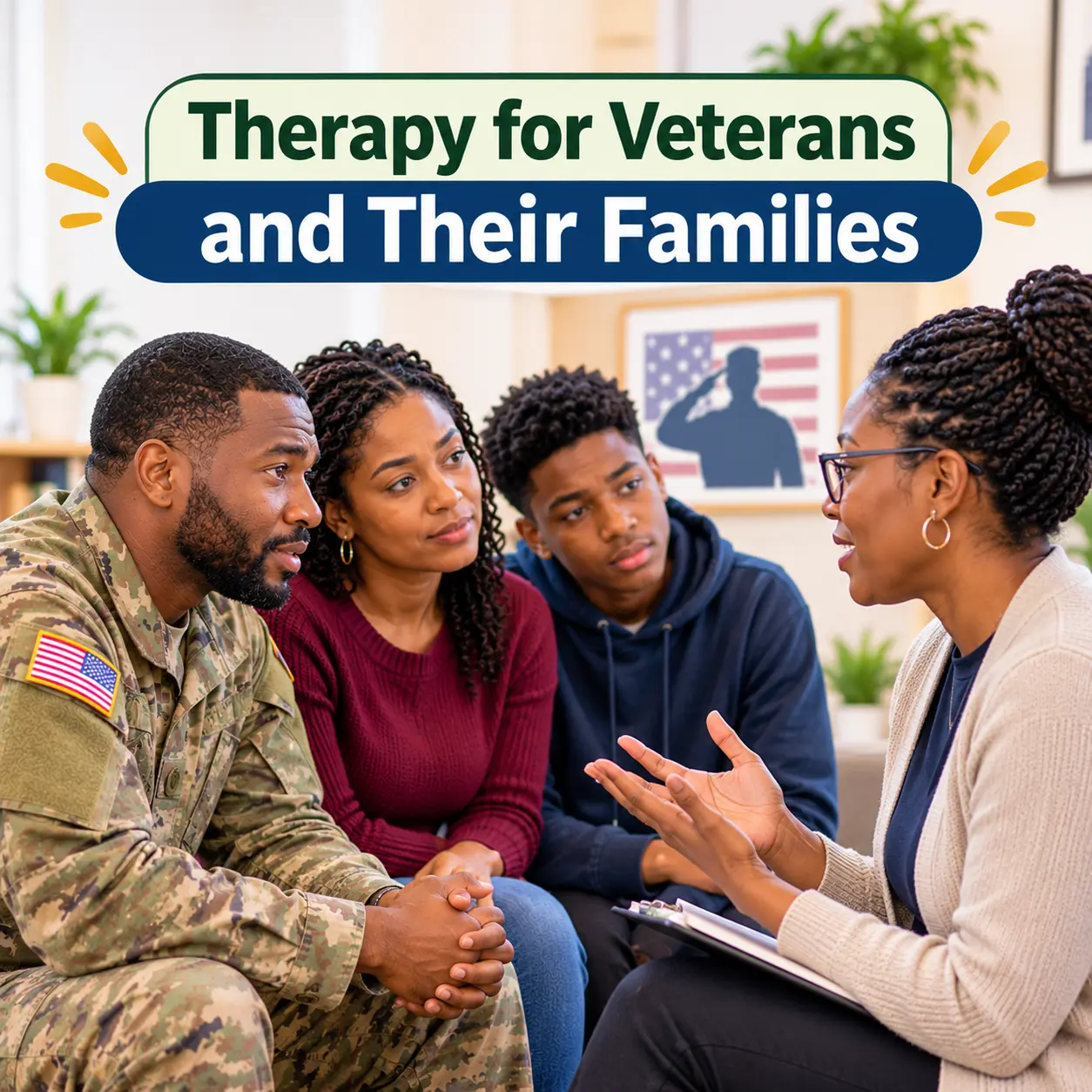
Therapy for Veterans and Their Families

Individual counseling can help veterans address trauma-related symptoms, anxiety, depression, grief, anger, and difficulties adjusting to civilian life. Depending on the person’s needs, treatment may focus on processing traumatic experiences, managing distress, improving sleep, or rebuilding relationships.

Couples or family counseling may also help when communication has broken down or when both partners are struggling to understand the changes in their relationship.

Family members deserve support in their own right, too. A spouse or parent does not have to wait until the veteran seeks treatment before talking with a counselor about stress, uncertainty, or emotional exhaustion.

Therapy for Veterans and Families

If you are searching for a mental health counselor in New York, consider asking about experience with trauma, military-related stress, PTSD, and family concerns. A clinician should be able to explain their approach, professional qualifications, and whether they can address the needs you bring to therapy.

Veterans may also qualify for specialized support through VA programs and Vet Centers, including individual, group, couples, and family counseling. Eligibility and services vary by program.

Finding Support in New York

At The New Hope Mental Health Counseling Services, people looking for mental health services in New York can explore emotional concerns in a supportive counseling setting. Veterans and family members considering therapy can ask about the practice’s experience with their particular needs and whether the available services are a suitable fit.

If you or a loved one is struggling after military service, you do not have to wait until relationships deteriorate or everyday life becomes unmanageable to seek help.

For veterans in crisis, the Veterans Crisis Line is available by calling 988 and pressing 1, texting 838255, or using the online chat service. Immediate danger requires emergency assistance.

Life after service can be complicated in ways that are difficult to explain to someone who has not experienced it. Finding support does not diminish what you have been through. It gives you a place to work through what is happening now.

Life After Services For Veterans - Your Questions Answered (FAQs)

1. What mental health challenges do veterans face after military service?
Some veterans experience PTSD, depression, anxiety, grief, sleep difficulties, substance use concerns, or challenges adjusting to civilian life. Others may not develop a mental health condition but still need support with relationships, identity, or major life changes.
2. How does PTSD affect veterans and their families?

PTSD symptoms can affect sleep, communication, emotional closeness, and family routines. Loved ones may feel confused or overwhelmed, which is why education, communication, and appropriate support can be helpful.

3. Can therapy help veterans adjust to civilian life?

Yes. Depending on individual needs, counseling can help with trauma-related symptoms, stress, relationships, grief, and readjustment. Specialized VA and Vet Center services may also be available to eligible veterans and families.

4. How can I encourage a veteran to seek mental health support?
Choose a calm moment, explain your concerns without judgment, and listen to their perspective. Offer practical help with finding services, but respect their pace unless there is an immediate safety concern.
5. Where can veterans find mental health services in New York?

Veterans can explore licensed community mental health providers, VA mental health services, and Vet Centers. Ask about eligibility, treatment specialties, confidentiality, and whether the service meets your needs.

Take the first step toward better mental health!

Fill the Below Form and Schedule a Clinical Consultation with us today→

Skip to content