The New Hope MHCS

When Stress Starts Showing Up in Your Body

You wake up with a headache before the day has even started. Your shoulders feel tight while you answer emails. Your stomach becomes unsettled before an important meeting, and at night, when you finally have time to rest, your body seems unable to relax.

You might tell yourself that you are simply busy.

There is a deadline to meet, a family member who needs help, a difficult conversation you have been avoiding, or a dozen small responsibilities competing for your attention. You keep going because stopping does not seem like an option.

But sometimes your body starts reacting before you fully acknowledge how much pressure you are under.

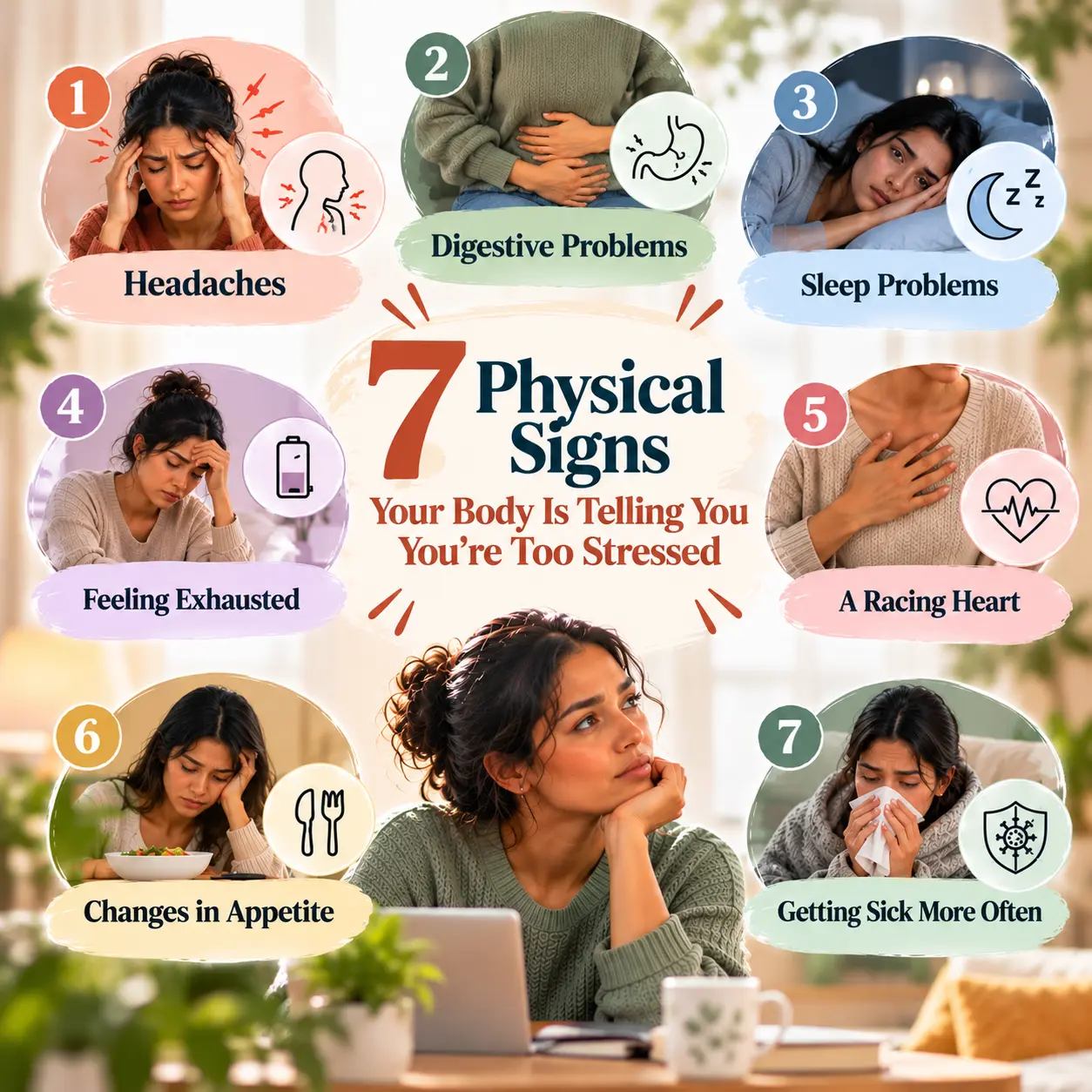
Stress can affect both emotional and physical health. It may contribute to headaches, muscle tension, sleep problems, digestive discomfort, changes in appetite, and a faster heartbeat. Persistent symptoms should not automatically be attributed to stress, however, because medical conditions can cause similar problems.

Recognizing the signs can help you decide when to slow down, make changes, or seek professional support.

1. Frequent Headaches and Tightness in Your Neck and Shoulders

You may notice that your shoulders gradually creep toward your ears during a difficult workday. Your jaw tightens while you read a message from someone who has upset you. By evening, your head aches, and you realize you have been holding tension in your body for hours.

Stress can cause muscles to tighten, which may contribute to tension headaches and discomfort in the neck, shoulders, or back.

You might also clench your jaw without noticing, particularly while concentrating or sleeping.

A stressful day does not automatically explain every headache or muscle ache. Frequent, severe, new, or worsening symptoms deserve medical attention. Sudden severe headaches or symptoms accompanied by weakness, confusion, or other alarming changes require urgent assessment.

If muscle tension repeatedly appears during periods of emotional pressure, it may also be useful to examine what is happening in your daily life.

Are you working through lunch? Avoiding a difficult conversation? Feeling responsible for everyone else’s needs?

Your body cannot tell you exactly what is wrong, but recurring tension can be a reason to pay closer attention.

2. Digestive Problems That Seem to Appear During Stressful Times

Your stomach may react before you have fully registered that you are anxious.

Perhaps you feel nauseated before a presentation. You lose your appetite during family conflict. Or you experience abdominal discomfort, bloating, constipation, or diarrhea when life becomes particularly demanding.

The digestive system and the brain communicate closely with one another. Stress can influence digestion and may worsen symptoms in people with certain gastrointestinal conditions.

You might notice a pattern. Your stomach feels relatively settled during a quiet weekend, then symptoms return when work begins on Monday.

That pattern is worth discussing with a healthcare professional, especially if symptoms keep returning.

Do not assume that digestive problems are purely psychological. Persistent pain, blood in the stool, unexplained weight loss, or other concerning changes need medical evaluation.

At the same time, if stress appears to worsen an existing digestive problem, addressing emotional strain may be one useful part of your overall care.

7 Physical Signs of Stress

3. Trouble Falling Asleep or Staying Asleep

You are exhausted. You turn off the light, settle into bed, and suddenly remember everything you did not finish.

A conversation from earlier in the day plays repeatedly in your mind. You start worrying about tomorrow, then about next week, then about a problem that may never happen.

You check the time.

Now you are worrying about how little sleep you will get.

Stress can interfere with sleep by keeping the mind alert when the body needs to rest. You may struggle to fall asleep, wake frequently during the night, or rise early with your thoughts already racing.

Poor sleep can then make the next day more difficult. Concentration drops, patience becomes thinner, and ordinary problems can feel harder to manage.
When this cycle continues, it can be useful to look beyond bedtime routines. A calming evening routine may help, but so may addressing the worries, workload, or relationship strain that follow you into bed.

If sleep difficulties persist or affect your ability to function, talk with a healthcare professional.

4. Feeling Exhausted Even When You Have Not Done Much Physically

Stress can be mentally tiring.

You may spend the day anticipating problems, managing other people’s reactions, making decisions, and trying not to forget anything. Even if you have spent most of the day sitting at a desk, you can finish it feeling completely depleted.

Sometimes you wake up tired despite having spent enough hours in bed.

You may cancel plans because the thought of making conversation feels exhausting. Small household tasks seem unusually demanding. You might become frustrated with yourself for having so little energy.

Stress can contribute to fatigue, but fatigue has many possible causes, including sleep disorders, anemia, thyroid problems, depression, medication effects, and other medical conditions.

If the exhaustion is persistent, unexplained, or interfering with daily life, a medical evaluation is a sensible first step.

It is also worth asking whether you have been living without enough recovery time. Constantly pushing through exhaustion does not always make you more productive. Sometimes it simply leaves you with fewer resources for the next day.

5. A Racing Heart or Feeling Physically on Edge

You are sitting at your desk when a difficult email arrives. Before you have even finished reading it, your heart starts beating faster. Your breathing becomes shallow, your palms feel damp, and your body seems ready to respond to a threat.

Stress activates the body’s natural response to perceived danger. Heart rate and breathing may increase, and muscles can become tense.

These reactions can happen during anxiety or intense emotional pressure.

However, a racing heart can also have medical causes. Do not automatically dismiss palpitations or chest discomfort as stress.

Seek emergency care for chest pain, severe shortness of breath, fainting, or symptoms that may indicate a medical emergency.

If you have recurring episodes of a racing heart, even when you do not feel particularly worried, arrange a medical assessment.

Once medical concerns have been addressed, a therapist may help you understand whether anxiety, chronic stress, or certain thought patterns are contributing to the experience.

6. Changes in Appetite or Eating Habits

Stress affects people differently.

You may forget to eat because your mind is occupied with work. Or you may find yourself reaching for snacks whenever you feel anxious, frustrated, lonely, or emotionally drained.

Perhaps you eat quickly without noticing when you are full. Perhaps food has become one of the few moments in the day when you feel comfort.

These patterns are not moral failures. They can be responses to emotional strain, disrupted routines, changes in sleep, or other factors.

The goal is not to judge yourself for what you eat. It is to notice whether your relationship with food changes when stress increases.

If appetite changes are persistent, involve significant weight changes, or are accompanied by other symptoms, speak with a healthcare professional. If eating has become a source of distress or feels difficult to control, mental health support may also be useful.

7. Getting Sick More Often or Noticing Existing Health Problems Worsen

When you have been under pressure for weeks, you may notice that you feel run-down, your sleep is poor, and existing health symptoms seem harder to manage.

Chronic stress can affect several body systems and may contribute to or worsen certain health problems. It can also influence behaviors that support health, such as sleep, physical activity, and eating routines.

That does not mean stress is the explanation for every infection or illness. Frequent infections or a noticeable change in your health should be discussed with a medical professional.

What may be useful is looking at the wider pattern. Are you constantly working late? Do you have time to recover from illness? Are you using alcohol to unwind or relying on caffeine to get through the day?

These questions can help identify areas where support or practical changes may be needed.

What Can You Do When Stress Begins Affecting Your Health?

The answer is not always to add another task to your schedule.

Sometimes the first step is noticing what your body is already telling you. You may need to protect a lunch break, ask for help with responsibilities, reduce an avoidable commitment, or have a conversation you have been putting off.

Simple practices such as gentle movement, regular meals, adequate sleep, breathing exercises, and time away from constant notifications may help some people manage everyday stress.

But these strategies cannot always address the source of the problem.

If your stress is tied to a difficult relationship, unresolved grief, workplace pressure, caregiving demands, or persistent anxiety, you may need more support than a relaxation exercise can provide.

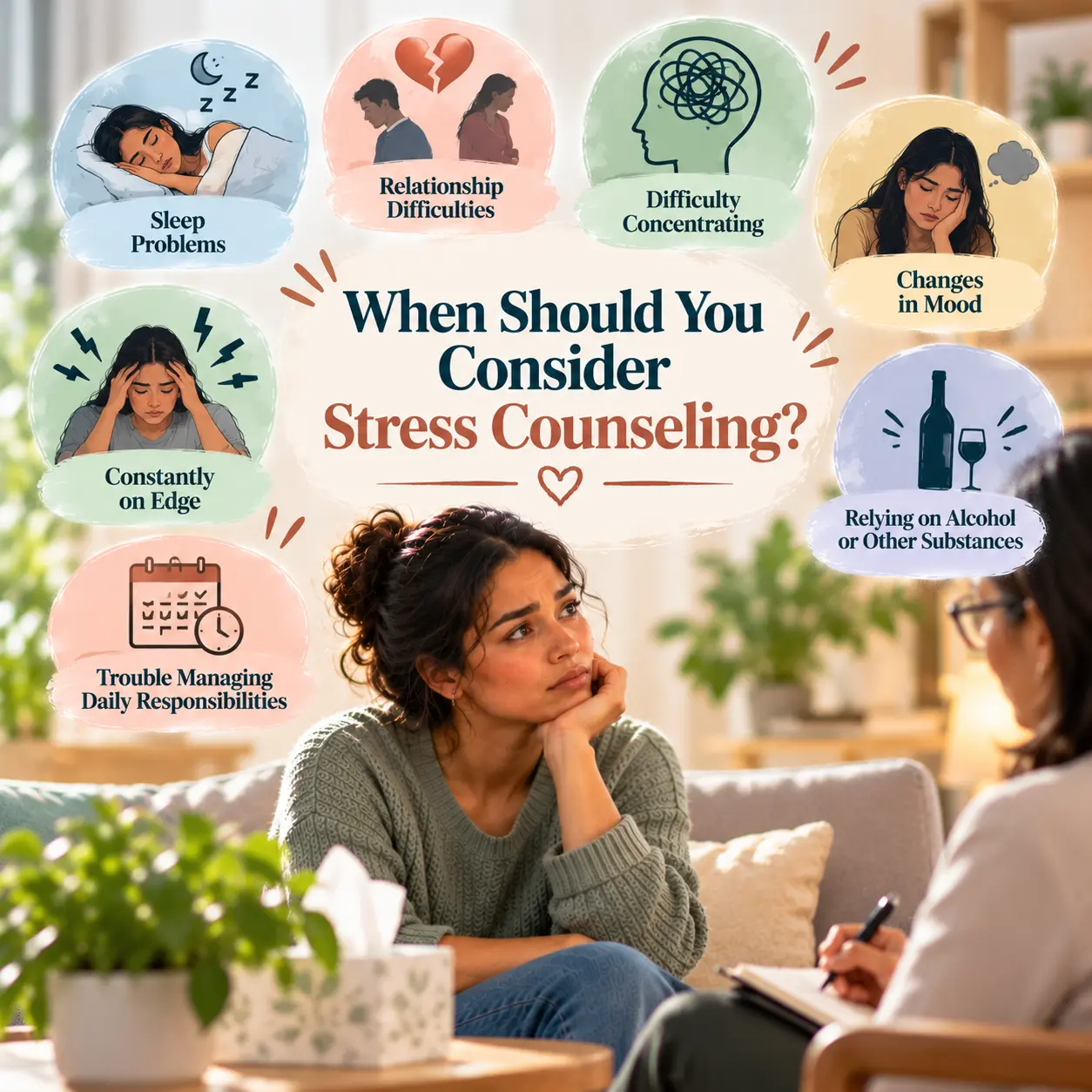
When Should You Consider Stress Counseling?

Consider speaking with a mental health professional if stress is affecting your sleep, relationships, concentration, mood, or ability to manage daily responsibilities. You may also benefit from counseling if you feel constantly on edge, have difficulty relaxing, or find yourself relying on alcohol or other substances to cope.

A therapist can help you recognize stress patterns, understand emotional triggers, practice coping skills, and work through problems that feel difficult to manage alone.

If you are looking for a mental health counselor in New York, consider your particular concerns and whether the clinician has experience with stress, anxiety, burnout, or related difficulties.

When to Consider Stress Counseling

At The New Hope Mental Health Counseling Services, individuals seeking mental health services in New York can ask about counseling options for ongoing stress and emotional distress. Therapy is not about eliminating every source of pressure from your life. It can help you understand your responses, set healthier boundaries, and find ways to cope without ignoring your own needs.

You do not have to wait until your body forces you to stop.

Stress Counseling - Your Questions Answered (FAQs)

Q1. What are the physical symptoms of stress?

Stress may contribute to headaches, muscle tension, stomach problems, fatigue, sleep difficulties, a faster heartbeat, changes in appetite, and difficulty concentrating. Physical symptoms can have other causes, so persistent or concerning changes should be assessed by a healthcare professional.

Q2. Can stress cause stomach problems?

Yes. Stress can influence digestion and may worsen symptoms such as abdominal discomfort, nausea, or changes in bowel habits. Persistent or severe digestive symptoms should not automatically be attributed to stress.

Q3. Can stress make you physically exhausted?

Yes. Ongoing stress can interfere with sleep, concentration, and recovery, leaving you feeling drained. Persistent fatigue can also result from medical conditions and deserves appropriate evaluation.

Q4. When should I see a therapist for stress?

Consider therapy when stress repeatedly affects your mood, sleep, relationships, work, or daily functioning, or when your usual coping methods no longer feel effective.

Q5. How can a mental health counselor in New York help with chronic stress?

A counselor may help you identify stress triggers, understand emotional responses, develop coping strategies, improve boundaries, and address related concerns such as anxiety or relationship difficulties.

Take the first step toward better mental health!

Fill the Below Form and Schedule a Clinical Consultation with us today→

Skip to content