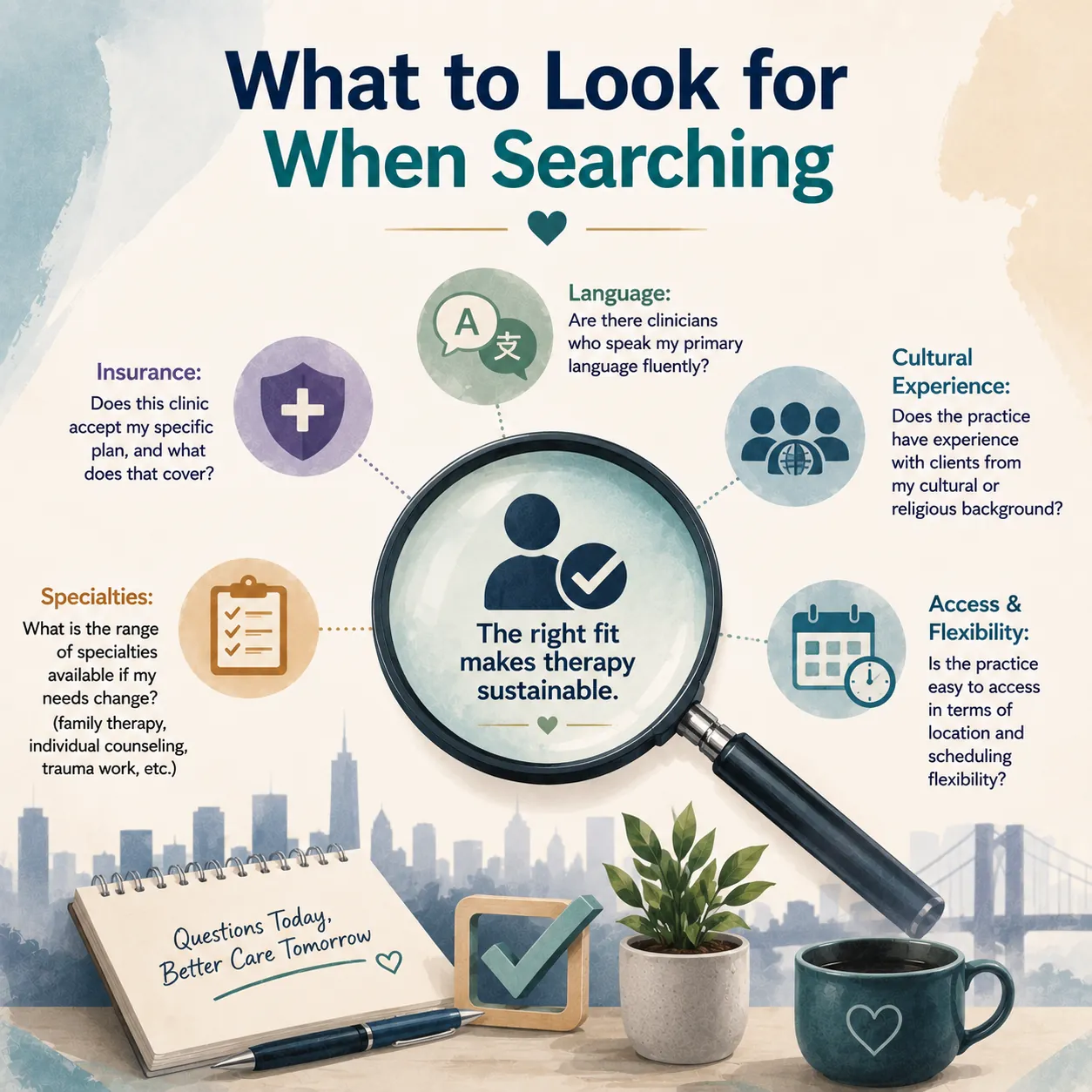

- How mental health is discussed – or often not discussed – within a client’s cultural or familial context
- The specific pressures tied to immigration, generational differences, or acculturation stress
- Family structures and expectations that differ from a purely Western, individualistic therapy model
- Religious or spiritual frameworks that shape how a client understands suffering, healing, and support
- Historical and social factors – including discrimination or marginalization – that shape a client’s relationship to institutions, including healthcare
A therapist without this understanding may unintentionally pathologize normal cultural practices, misread family dynamics, or offer guidance that doesn’t actually fit the client’s real life and values. Culturally competent care means the therapeutic relationship starts from a place of accurate understanding rather than assumption.