The New Hope MHCS

What Is PTSD? Symptoms, Causes, and How Trauma-Informed Therapy Can Help

Trauma does not always leave visible marks. You cannot see it in an X-ray or measure it in a blood test. But for millions of people living with post-traumatic stress disorder, it shapes nearly every dimension of daily life – how they sleep, how they respond to unexpected sounds, how they relate to the people they love most, and how safe they feel in their own body.

June is National PTSD (Post-Traumatic Stress Disorder) Awareness Month, an observance led by the U.S. Department of Veterans Affairs and supported by mental health organizations across the country. Its purpose is straightforward: to help more people understand what PTSD actually is, recognize its symptoms, reduce the stigma that so often prevents people from seeking help, and connect those who are suffering with care that genuinely works.

Whether you have lived experience of trauma, love someone who does, or simply want to be a more informed member of your community – this guide is for you.

What Is PTSD?

Post-traumatic stress disorder is a mental health condition that can develop after a person experiences or witnesses a traumatic event. The word ‘traumatic’ covers a wider range of experiences than many people realize. While combat and assault are most commonly associated with PTSD, the condition can also develop following car accidents, natural disasters, childhood abuse or neglect, sudden loss, medical emergencies, domestic violence, sexual violence, or any event the brain processes as a severe threat to safety.

PTSD is not a sign of weakness or a character flaw. It is the brain’s attempt to protect you from future harm by staying on high alert. The problem is that this protective mechanism, designed for short-term survival, can become permanently activated – turning what was once a response to danger into an ongoing state of distress that disrupts everyday functioning.

According to the National Center for PTSD, between seven and eight percent of the population will experience PTSD at some point during their lifetime. That translates to tens of millions of people in the United States alone.

What Are the 4 Types of PTSD Symptoms?

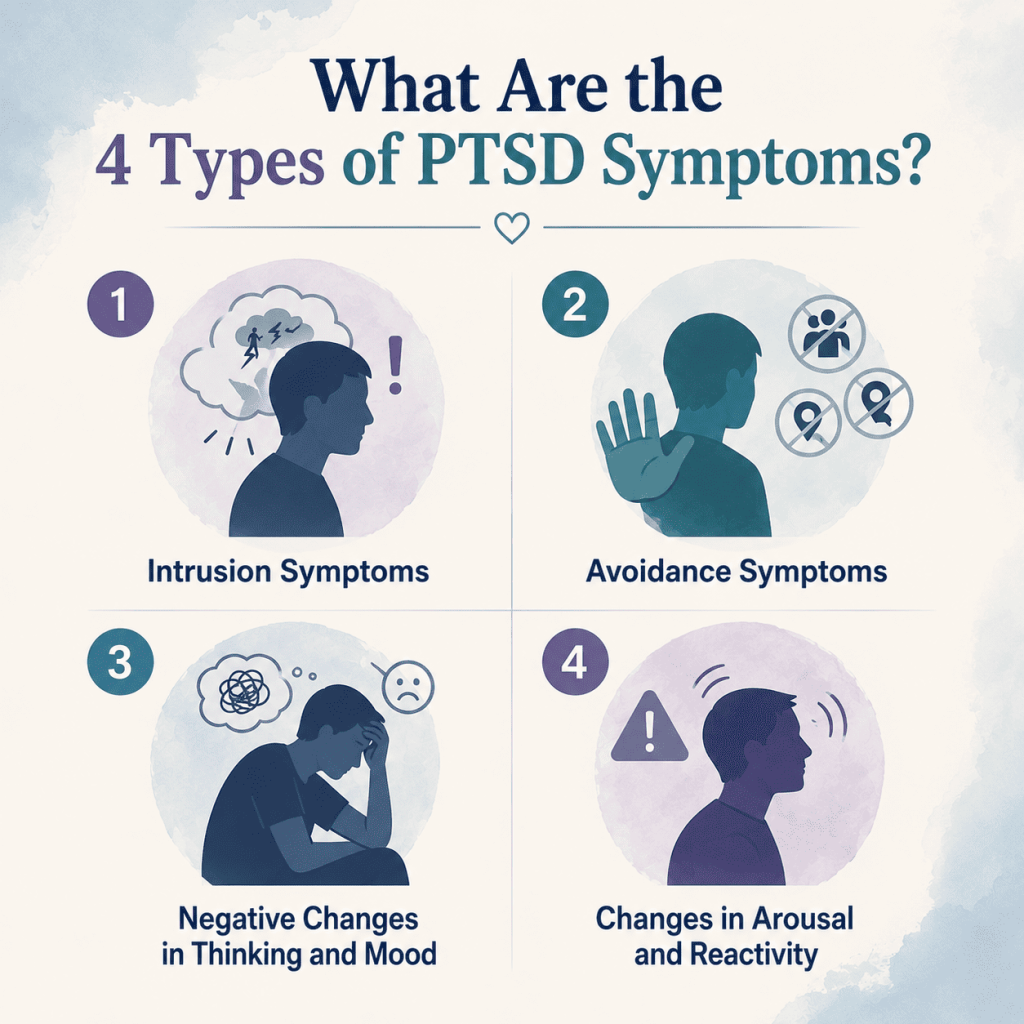
Mental health professionals organize PTSD symptoms into four main clusters. Understanding these can help you recognize the condition in yourself or someone you care about.

1. Intrusion Symptoms

These involve the unwanted re-experiencing of the traumatic event. Vivid flashbacks that feel as though the trauma is happening again in real time, disturbing nightmares, and intense emotional or physical reactions to reminders of the event are all intrusion symptoms. A specific sound, smell, location, or date can trigger overwhelming distress with little warning.

2. Avoidance Symptoms

People with PTSD often go to significant lengths to avoid anything that reminds them of the trauma – specific places, people, conversations, activities, or even certain thoughts and feelings. While avoidance provides temporary relief, it reinforces the brain’s association between those reminders and danger, which maintains and often deepens PTSD symptoms over time.
3. Negative Changes in Thinking and Mood

This cluster includes persistent negative beliefs about oneself or the world, distorted feelings of guilt or blame, emotional detachment from others, loss of interest in previously enjoyed activities, and difficulty experiencing positive emotions. Many people with PTSD describe a pervasive numbness that makes genuine connection and joy feel out of reach.

4. Changes in Arousal and Reactivity

This refers to a state of heightened alertness that does not switch off. Symptoms include being easily startled, difficulty sleeping, irritability or angry outbursts, difficulty concentrating, and hypervigilance – a constant scanning of the environment for potential threats. This state is profoundly exhausting and takes a significant toll on physical health over time.

Can PTSD Go Away Without Treatment?

This is one of the most commonly searched questions about PTSD – and the honest answer is that for most people, it does not resolve on its own. Some individuals experience a reduction in symptoms over time, particularly with strong social support and the absence of ongoing stressors. But for the majority of people living with PTSD, symptoms persist or worsen without professional intervention.

The good news is that PTSD is highly treatable. Significant recovery is achievable with the right care, and many people go on to live full, connected, meaningful lives following treatment. Waiting, however, typically means a longer and more complex road to recovery.

Who Is Most Affected by PTSD?

PTSD can affect anyone, regardless of age, gender, background, or the nature of their trauma. Women are diagnosed at roughly twice the rate of men, largely due to higher rates of sexual and interpersonal trauma. Veterans and first responders represent well-known high-risk groups, but the majority of people living with PTSD have no military connection.

In New York, the prevalence of trauma and PTSD is particularly significant. Healthcare workers who served during the COVID-19 pandemic, survivors of community violence, immigrants who have experienced displacement and persecution, and countless others carry experiences that meet the clinical threshold for PTSD. Access to informed, compassionate care in this city matters enormously.

What Is the Best Therapy for PTSD?

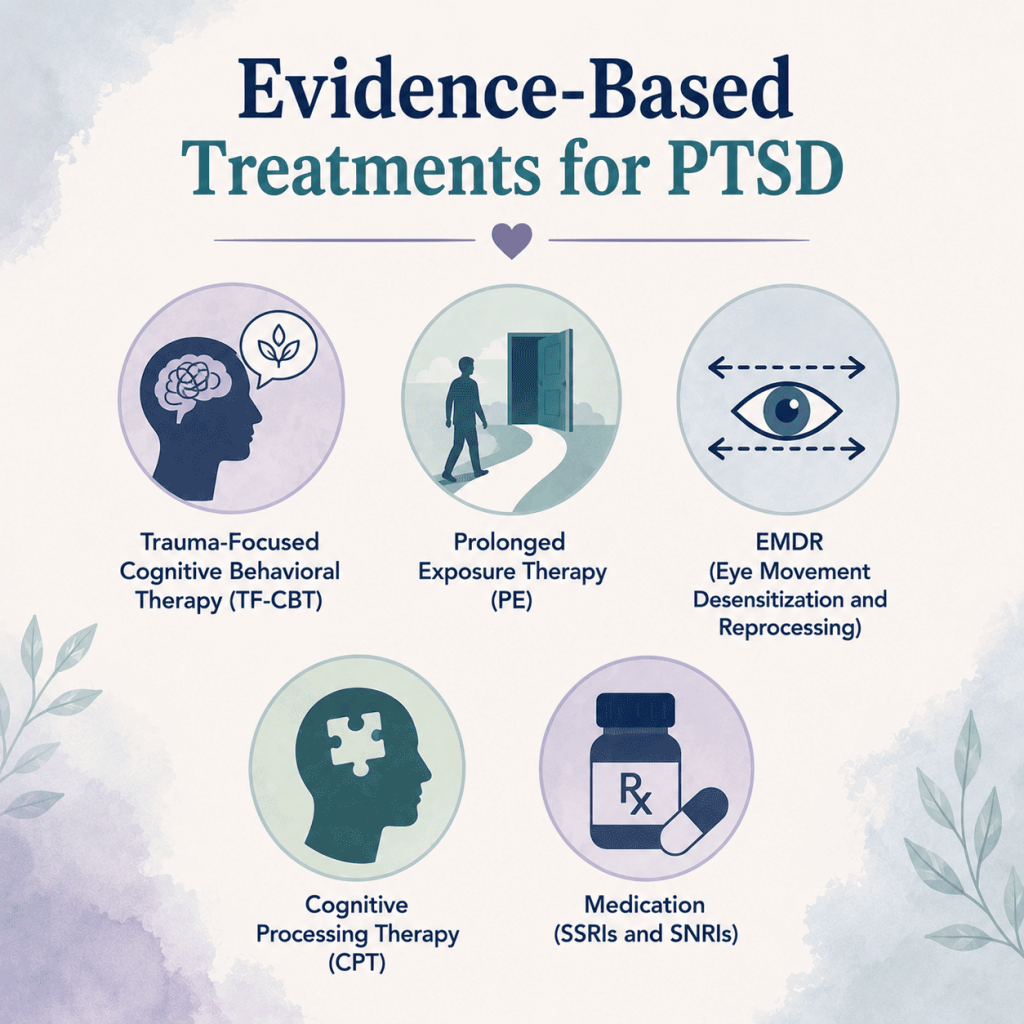
Several treatments have strong evidence bases for PTSD. The most effective options include:

  • Trauma-Focused Cognitive Behavioral Therapy (TF-CBT): Helps individuals process traumatic memories, challenge distorted thinking, and reduce the fear response associated with trauma reminders.
  • Prolonged Exposure Therapy (PE): A structured protocol involving gradual, careful engagement with avoided trauma-related memories and situations, helping the brain learn these memories are not current dangers.
  • EMDR (Eye Movement Desensitization and Reprocessing): Uses guided bilateral stimulation while the person briefly focuses on traumatic memories, supporting the brain’s natural processing of distressing experiences.
  • Cognitive Processing Therapy (CPT): Focuses specifically on changing unhelpful beliefs that developed as a result of trauma.
  • Medication: SSRIs and SNRIs are FDA-approved for PTSD and can help manage symptoms alongside therapy.
Evidence Base treatments for PTSD

How to Support Someone With PTSD

If someone you love is living with PTSD, your support matters – even when you feel uncertain about what to say or do.

  • Believe them without requiring proof or detailed explanation.
  • Avoid pushing them to talk about the trauma before they are ready.
  • Learn about PTSD so your responses come from understanding rather than confusion or fear.
  • Encourage professional support without pressure or ultimatums.
  • Attend to your own mental health – supporting someone with PTSD is emotionally demanding.

Getting Help: You Do Not Have to Wait

If you recognize PTSD symptoms in yourself – or if you have been carrying unaddressed trauma – this month is a meaningful moment to take a step forward. You do not need a formal diagnosis to reach out. You do not need to have experienced combat or a single dramatic event. If you are struggling, that is reason enough.

At The New Hope Mental Health Counseling Services, our licensed therapists provide trauma-informed, evidence-based care for individuals living with PTSD, complex trauma, and related conditions. Whether you are looking for a mental health counselor in New York who specializes in trauma, or seeking a trusted mental health clinic in New York with a compassionate, judgment-free approach, our team is ready to support you. Healing is not just possible – it is within reach. Visit www.thenewhopemhcs.com to learn more or book your consultation.

The Bottom Line

PTSD is one of the most misunderstood and most treatable mental health conditions. National PTSD Awareness Month is an invitation to replace misconceptions with understanding – and silence with conversation. Whether you are living with PTSD, loving someone who is, or simply wanting to show up better for your community, awareness is where healing begins.

You are not what happened to you. And you do not have to face it alone.

PTSD Questions Answered by Mental Health Experts

Q1: What are the signs that I have PTSD?

The key signs fall into four areas. First, intrusion symptoms – unwanted flashbacks, distressing nightmares, or intense physical reactions like a racing heart when something reminds you of the trauma. Second, avoidance – deliberately staying away from people, places, conversations, or thoughts connected to what happened. Third, negative shifts in mood and thinking – persistent guilt, emotional numbness, feeling detached from others, or losing interest in things that once mattered. Fourth, heightened reactivity – being easily startled, sleeping poorly, struggling to concentrate, or feeling constantly on edge. If these have lasted more than a month and are disrupting your daily life, a professional evaluation is the right next step.

Q2: Can PTSD go away on its own without treatment?

For a small number of people – particularly after a single incident with strong immediate support – symptoms do ease over time. For most, however, PTSD does not resolve without professional intervention. Left untreated, it tends to deepen rather than fade. The avoidance that feels protective in the short term actually reinforces the brain’s fear response, making symptoms harder to shift the longer they persist. Secondary consequences – depression, substance use, relationship breakdown, physical health decline – accumulate in the gap. Effective treatment exists and works for the majority of people who engage with it. Waiting is rarely the neutral option it feels like.

Q3: What is the best therapy for PTSD?

Three approaches have the strongest research support. Prolonged Exposure Therapy gradually and safely brings avoided trauma memories back into focus, helping the brain learn that the memory itself is not a current danger. Cognitive Processing Therapy targets the distorted beliefs trauma creates – things like self-blame, feeling permanently broken, or seeing the world as entirely unsafe. EMDR uses guided bilateral stimulation while briefly focusing on distressing memories, supporting the brain’s natural processing of traumatic experiences. All three have strong completion and recovery rates. Medication – particularly SSRIs – can complement therapy by managing symptoms like sleep disruption and anxiety. A qualified trauma therapist will recommend the best fit based on your specific history.

Q4: Does PTSD only affect veterans and soldiers?

No – and this misconception causes real harm by preventing civilians from recognizing their own symptoms and seeking care. Veterans represent a well-known high-risk group, but the majority of people living with PTSD have no military background. PTSD commonly develops after sexual assault, domestic violence, childhood abuse or neglect, serious accidents, medical trauma, sudden bereavement, and experiences of displacement or persecution. Women are diagnosed at roughly twice the rate of men, primarily because of higher exposure to interpersonal and sexual trauma. First responders, healthcare workers, and survivors of community violence are also significantly affected. If you have experienced trauma and recognize the symptoms, your experience is valid regardless of its source.

Q5: How do I help someone with PTSD?

Start by believing them without needing proof or a detailed explanation — trust is foundational. Avoid encouraging them to talk through the trauma before they are ready, as this can retraumatize rather than help. Take time to genuinely understand what PTSD involves so your responses come from knowledge rather than frustration or confusion. Encourage professional support without ultimatums or timelines. Be consistent — showing up reliably over time matters more than any single gesture. And attend to your own mental health too. Supporting someone with PTSD is emotionally demanding, and sustained support is only possible when you are also taken care of. 

Take the first step toward better mental health!

Fill the Below Form and Schedule a Clinical Consultation with us today→

Skip to content