
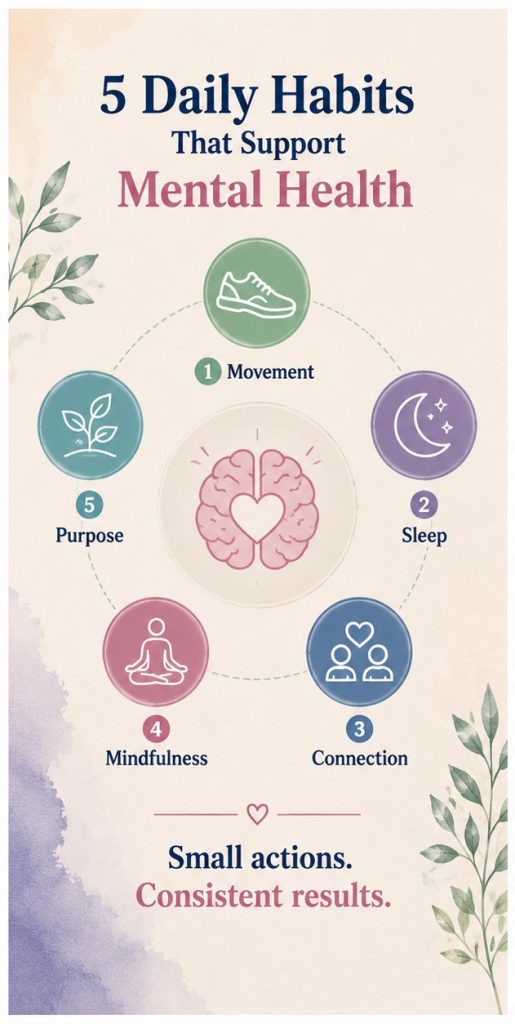
1. Movement
Physical activity is one of the most well-researched mental health interventions available – and it requires no prescription. Even moderate exercise, like a 20-minute walk, has been shown to reduce cortisol levels, increase endorphins, and improve mood. You do not need a gym membership or a structured workout plan. Consistency matters more than intensity. A ten-minute walk taken every day is more beneficial than an occasional intense session.
2. Sleep
Sleep is the foundation upon which every other mental health effort rests. Chronic sleep deprivation impairs emotional regulation, increases anxiety and irritability, and weakens the prefrontal cortex’s ability to inhibit the amygdala – the brain’s threat-detection center. Protecting your sleep through consistent bedtimes, a dark and cool environment, and limiting screen exposure before bed is one of the highest-leverage mental health actions you can take.
3. Connection
Humans are wired for social connection. Loneliness activates the same brain regions as physical pain, and chronic isolation is associated with significantly elevated rates of depression and anxiety. Building connection does not require large social gatherings or new friendships. A genuine conversation with someone you already know – one where you are actually present and engaged – contributes meaningfully to your sense of belonging and wellbeing.
4. Mindfulness and Presence
Mindfulness is not a personality type or a spiritual practice exclusive to certain people. It is simply the act of paying deliberate attention to the present moment without judgment. Research consistently shows that even brief daily mindfulness practice – as little as five to ten minutes – reduces rumination, decreases anxiety, and improves overall emotional regulation. Apps, guided sessions, or simply sitting quietly with a cup of tea qualify.