The New Hope MHCS

The 11-Year Gap: Why People Wait Over a Decade to Seek Mental Health Help - And What to Do Instead

Imagine being diagnosed with a serious physical illness – a cardiac condition, a metabolic disorder, a neurological problem – and then waiting eleven years before beginning treatment. The idea sounds almost unthinkable. The harm that would accumulate in that time, the complications that could develop, the suffering that would go unaddressed – all of it preventable.

Imagine being diagnosed with a serious physical illness – a cardiac condition, a metabolic disorder, a neurological problem – and then waiting eleven years before beginning treatment. The idea sounds almost unthinkable. The harm that would accumulate in that time, the complications that could develop, the suffering that would go unaddressed – all of it preventable.

Understanding why this gap exists – and what can be done about it – is one of the most important conversations we can have, especially to create Mental Health Awareness.

The Scale of the Problem

The eleven-year treatment gap is not a fringe statistic. It is drawn from large-scale epidemiological research and has been replicated across multiple studies and countries. In the United States, approximately one in five adults lives with a mental health condition in any given year. Of those, roughly half do not receive treatment.

For some conditions, the gap is even wider. Many people living with bipolar disorder wait an average of six to ten years for a correct diagnosis alone. Anxiety disorders, despite being highly treatable, often go unaddressed for years because the symptoms are normalized or misattributed to personality traits. Post-traumatic stress disorder frequently goes unrecognized in people who do not associate their experiences with the diagnostic criteria they have heard about.

Meanwhile, the conditions do not remain static. Untreated mental health conditions tend to worsen over time, develop comorbidities, and become more complex to treat. Depression increases the risk of heart disease, substance use disorders, and suicide. Untreated anxiety can severely restrict a person’s world. The cost of waiting is real.

The reasons people delay seeking mental health treatment

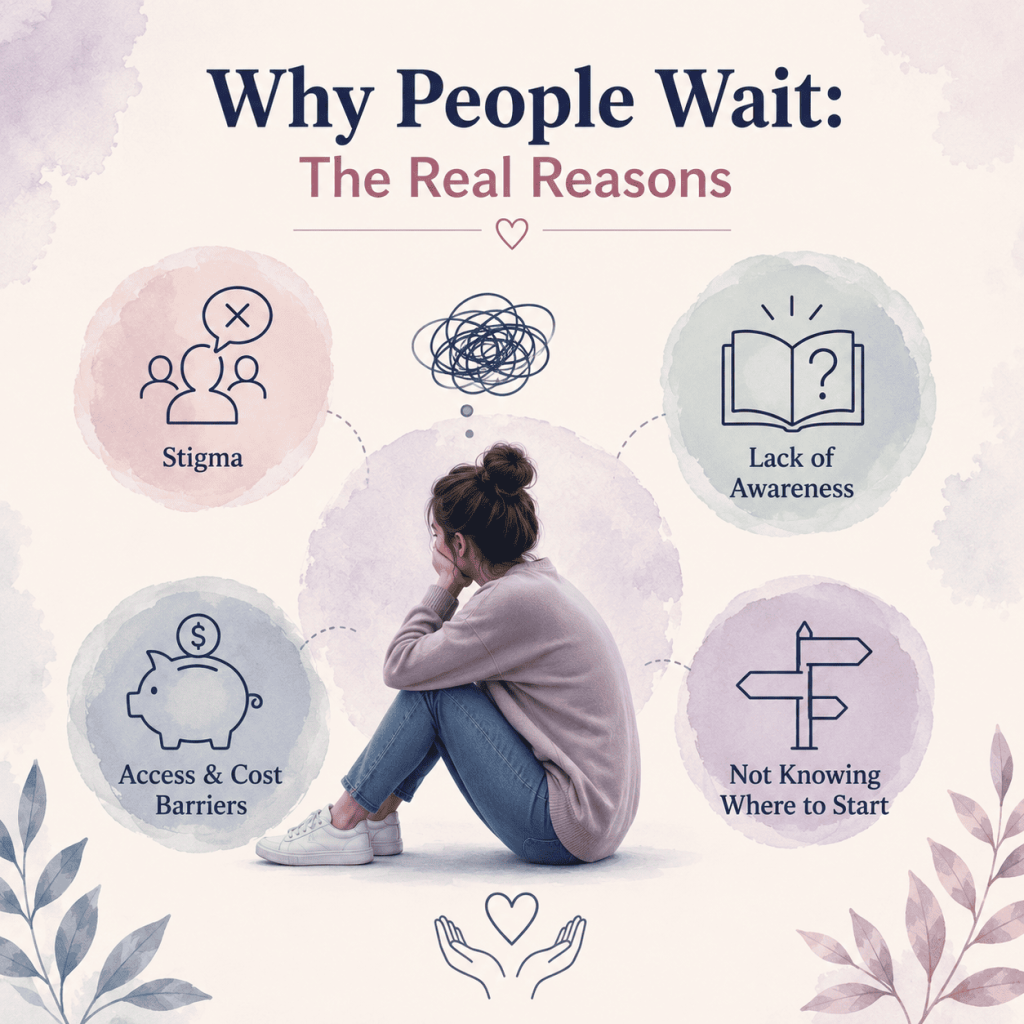
Why People Wait: The Real Reasons

The reasons people delay seeking mental health treatment are numerous and intersecting. Understanding them is essential for addressing them.

1. Stigma

Despite decades of awareness campaigns, stigma remains one of the most powerful barriers to mental health care. People fear being judged, labeled, or seen as weak. They worry about how a mental health diagnosis might affect their career, their relationships, or how they see themselves. In many communities and cultures, mental health struggles are not discussed openly, and seeking help carries social risk.

Internalized stigma – the shame a person feels about their own mental health – can be even more damaging than external stigma. It keeps people silent even when they are suffering significantly.
2. Lack of Awareness

Many people simply do not recognize what they are experiencing as a mental health condition. They describe depression as “just feeling tired” or “being unmotivated.” They frame anxiety as “being a worrier” or “not handling stress well.” Without a framework for understanding their symptoms, they have no reason to connect those symptoms with the idea that professional help could change their experience.

This is why mental health education matters at every level – in schools, in workplaces, in primary care settings, and in public health campaigns. The earlier people learn to recognize mental health symptoms, the earlier they are likely to seek help.

3. Access and Cost Barriers

For many people, the desire to seek help exists but the means do not. Mental health care remains inaccessible for a significant portion of the population due to cost, limited insurance coverage, geographic barriers, long wait times, and a shortage of providers – particularly in underserved communities and rural areas. In cities like New York, mental health clinics can be difficult to navigate without guidance, and out-of-pocket costs can be prohibitive.

4. Not Knowing Where to Start

Even for people who recognize their symptoms and have the means to seek help, the process of finding appropriate care can feel overwhelming. Which type of therapist? What kind of therapy? How do you know if someone is qualified? For a person already struggling with anxiety or depression, the administrative burden of navigating mental health care can itself become a barrier.

5. The Consequences of the Gap

The eleven-year treatment gap has consequences that extend far beyond the individual. Untreated mental health conditions affect family functioning, workplace productivity, community cohesion, and public health. Depression is a leading cause of disability worldwide. Anxiety disorders account for enormous healthcare costs. Suicide, which is almost always connected to untreated or undertreated mental illness, claims over 47,000 lives in the United States annually.

When we talk about closing the treatment gap, we are not talking about a niche healthcare issue. We are talking about one of the most consequential public health challenges of our time.

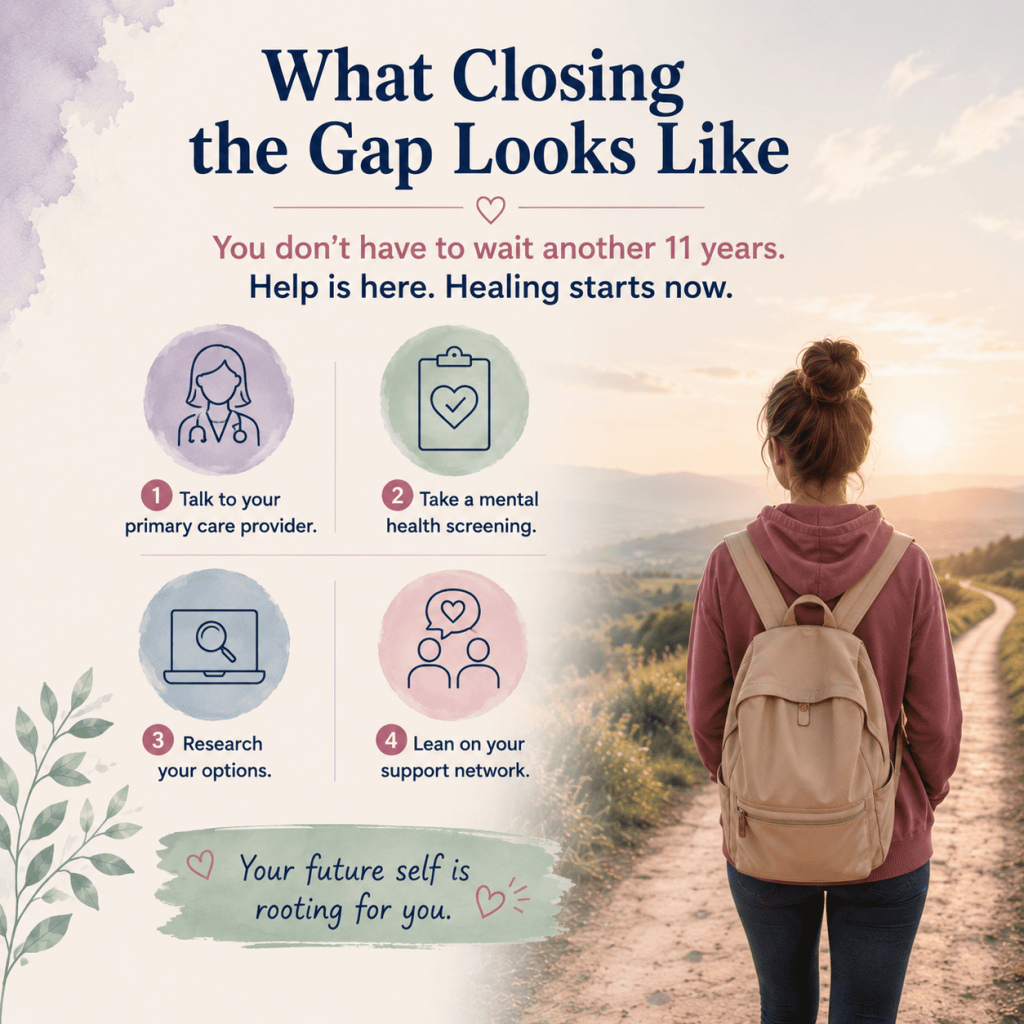
What Closing the Gap Looks Like

Addressing the eleven-year gap requires action at multiple levels. Policy changes that expand access and insurance coverage matter. Investment in mental health workforce development matters. Destigmatization campaigns matter. But individual action matters too – perhaps more than any other single factor.

If you are currently experiencing symptoms of a mental health condition – persistent sadness, excessive worry, intrusive thoughts, emotional numbness, or any experience that is meaningfully affecting your daily life – please do not wait. The version of you eleven years from now will be grateful you did not.

  • Talk to your primary care provider: Primary care visits are often the entry point into mental health care. Be honest about what you are experiencing.
  • Take a mental health screening: Free, confidential online screenings can help you understand whether what you are experiencing warrants professional attention.
  • Research your options: Many mental health providers offer sliding-scale fees, telehealth options, and shorter wait times than you might expect.
  • Lean on support networks: Talking to a trusted person about what you are going through is not a substitute for professional care, but it can be the first step toward it.
Addressing the eleven-year gap

You Do Not Have to Wait

The eleven-year gap is a public health statistic, but it is made up of millions of individual decisions – or failures to decide – to seek help. Every person who reaches out sooner narrows that gap in a way that is personal, immediate, and meaningful.

At The New Hope Mental Health Counseling Services, we are committed to making mental health care accessible, compassionate, and free from judgment. Our team of licensed therapists includes experienced mental health counselors in New York who specialize in depression, anxiety, trauma, relationship challenges, and more. Whether you are looking for a mental health clinic in New York that accepts your insurance or simply want to speak with someone who understands, we are here. Do not wait eleven more years. Schedule a Clinical Consultation with us today.

Take the first step toward better mental health!

Fill the Below Form and Schedule a Clinical Consultation with us today→

Skip to content